



Je cadeautjes zeker op tijd in huis hebben voor de feestdagen? Kom langs in onze winkels en vind het perfecte geschenk!
- Afhalen na 1 uur in een winkel met voorraad
- Gratis thuislevering in België vanaf € 30
- Ruim aanbod met 7 miljoen producten
Je cadeautjes zeker op tijd in huis hebben voor de feestdagen? Kom langs in onze winkels en vind het perfecte geschenk!
- Afhalen na 1 uur in een winkel met voorraad
- Gratis thuislevering in België vanaf € 30
- Ruim aanbod met 7 miljoen producten





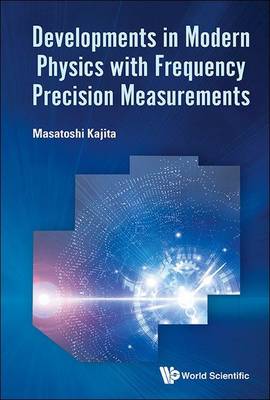
Developments in Modern Physics with Frequency Precision Measurements
Masatoshi Kajita
Hardcover | Engels
€ 134,45
+ 268 punten
Omschrijving
This book presents a comprehensive history of the precision measurement of physical values. Improvements in time and frequency measurement accuracy have been instrumental to the advancement of physics. Pivotal discoveries in the field, such as the establishment of Newtonian mechanics, have often coincided with the development of more accurate clocks. There remain many questions in modern physics whose resolution would require the measurement of effects too small for our current technology to discern. Before we can solve these mysteries, we must first achieve further reductions in measurement uncertainty.The book charts the fascinating journey from our reliance on the movements of the sun to measure time, to the most recent developments in atomic clocks, reducing measurement uncertainty to 10-18. Along the way, it considers how these advancements have contributed to our understanding of physics, and the role that further improvements will play in the field. All from undergraduate students to industry professionals will find great value in this detailed and insightful volume on the past and future of frequency precision measurements.
Specificaties
Betrokkenen
- Auteur(s):
- Uitgeverij:
Inhoud
- Aantal bladzijden:
- 284
- Taal:
- Engels
Eigenschappen
- Productcode (EAN):
- 9781800617056
- Verschijningsdatum:
- 22/09/2025
- Uitvoering:
- Hardcover
- Formaat:
- Genaaid
- Afmetingen:
- 152 mm x 229 mm
- Gewicht:
- 548 g


Alleen bij Standaard Boekhandel
+ 268 punten op je klantenkaart van Standaard Boekhandel
CADEAU


Beoordelingen
We publiceren alleen reviews die voldoen aan de voorwaarden voor reviews. Bekijk onze voorwaarden voor reviews.