


- Afhalen na 1 uur in een winkel met voorraad
- Gratis thuislevering in België vanaf € 30
- Ruim aanbod met 7 miljoen producten
- Afhalen na 1 uur in een winkel met voorraad
- Gratis thuislevering in België vanaf € 30
- Ruim aanbod met 7 miljoen producten





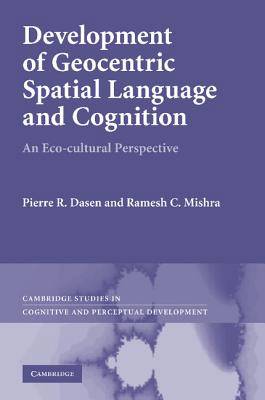
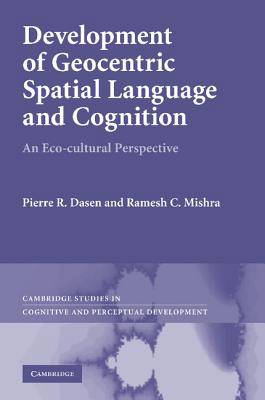
Development of Geocentric Spatial Language and Cognition
An Eco-Cultural Perspective
Pierre R Dasen, Ramesh C Mishra
€ 76,45
+ 152 punten
Uitvoering
Omschrijving
Egocentric spatial language uses coordinates in relation to our body to talk about small-scale space ('put the knife on the right of the plate and the fork on the left'), while geocentric spatial language uses geographic coordinates ('put the knife to the east, and the fork to the west'). How do children learn to use geocentric language? And why do geocentric spatial references sound strange in English when they are standard practice in other languages? This book studies child development in Bali, India, Nepal, and Switzerland and explores how children learn to use a geocentric frame both when speaking and performing non-verbal cognitive tasks (such as remembering locations and directions). The authors examine how these skills develop with age, look at the socio-cultural contexts in which the learning takes place, and explore the ecological, cultural, social, and linguistic conditions that favour the use of a geocentric frame of reference.
Specificaties
Betrokkenen
- Auteur(s):
- Uitgeverij:
Inhoud
- Aantal bladzijden:
- 410
- Taal:
- Engels
- Reeks:
- Reeksnummer:
- nr. 12
Eigenschappen
- Productcode (EAN):
- 9781107412484
- Verschijningsdatum:
- 3/01/2013
- Uitvoering:
- Paperback
- Formaat:
- Trade paperback (VS)
- Afmetingen:
- 152 mm x 229 mm
- Gewicht:
- 544 g


Alleen bij Standaard Boekhandel
+ 152 punten op je klantenkaart van Standaard Boekhandel
Cadeau

AANGERADEN


Beoordelingen
We publiceren alleen reviews die voldoen aan de voorwaarden voor reviews. Bekijk onze voorwaarden voor reviews.