


- Afhalen na 1 uur in een winkel met voorraad
- Gratis thuislevering in België vanaf € 30
- Ruim aanbod met 7 miljoen producten
- Afhalen na 1 uur in een winkel met voorraad
- Gratis thuislevering in België vanaf € 30
- Ruim aanbod met 7 miljoen producten





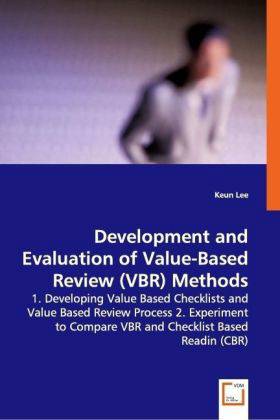
Development and Evaluation of Value-Based Review (VBR) Methods - 1. Developing Value Based Checklists and Value Based Review Process
Keun Lee
Paperback | Engels
€ 99,95
+ 199 punten
Omschrijving
Reviewing is a key activity that can find defects at an early stage of system and software development. Currently, there are many review techniques proposed. However, to data there have been no review techniques that have focused explicitly on the relative business value or mission value of the artifacts being reviewed. In this book, I provide Value-based review techniques adding cost effectiveness and value of each issue into review processes, and report on an experiment on Value-based review. I developed a set of VBR checklists with issues ranked by success-criticality, and a set of VBR processes prioritized by issue criticality and stakeholder-negotiated product capability priorities. The experiment had performed to compare VBR and Checklist Based Reading (CBR). 28 independent verification and validation (IV&V) subjects (full-time working professionals taking a distance learning course) reviewing specifications produced by 18 real-client, full-time student e-services projects. The result of the experiment showed the VBRs were roughly twice as cost-effective as the CBRs.
Specificaties
Betrokkenen
- Auteur(s):
- Uitgeverij:
Inhoud
- Aantal bladzijden:
- 176
- Taal:
- Engels
Eigenschappen
- Productcode (EAN):
- 9783639032529
- Verschijningsdatum:
- 10/06/2008
- Uitvoering:
- Paperback
- Formaat:
- Trade paperback (VS)
- Afmetingen:
- 152 mm x 229 mm
- Gewicht:
- 244 g


Alleen bij Standaard Boekhandel
+ 199 punten op je klantenkaart van Standaard Boekhandel
Cadeau

AANGERADEN


Beoordelingen
We publiceren alleen reviews die voldoen aan de voorwaarden voor reviews. Bekijk onze voorwaarden voor reviews.