


- Afhalen na 1 uur in een winkel met voorraad
- Gratis thuislevering in België vanaf € 30
- Ruim aanbod met 7 miljoen producten
- Afhalen na 1 uur in een winkel met voorraad
- Gratis thuislevering in België vanaf € 30
- Ruim aanbod met 7 miljoen producten




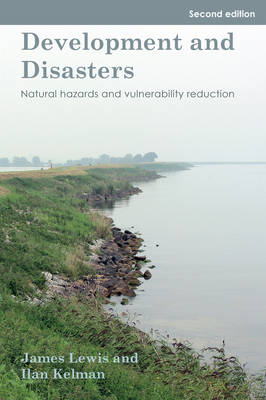
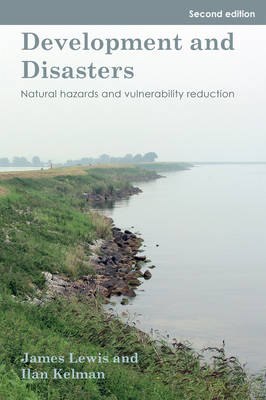
Development and Disasters
Natural hazards and vulnerability reduction
James Lewis, Ilan Kelman
Paperback | Engels
€ 74,45
+ 148 punten
Omschrijving
Good development could - and should - be the driving force for averting disasters by reducing vulnerability. But conversely, in many cases, development itself becomes a major cause of vulnerability and disasters. This new edition describes the complex relationship between disasters and development, as a prime medium both of vulnerability and its reduction. Its chapters show that disasters are not events; they are processes. Disasters are not unusual; they are expressions of the everyday, everywhere normality. As such, 'natural disasters' do not exist, since they come from vulnerability, not from nature. Vulnerability accrues from processes of change, including development, disasters, and natural hazards. It is a potential product of all societal values, behaviours, activities, and undertakings. To demonstrate that vulnerability through development is the root cause of disasters - that disasters are not 'natural' - this book starts with the patterns, meanings, manifestations, and experiences of vulnerabilities emerging from development. Vulnerability is made, leading to disaster risk creation. This vulnerability and development process is illustrated through historical examples from islands: sea-level rise affecting atolls, Tonga and Antigua across many hazards, and Sri Lanka and Chiswell in southern England affected by storms. The rich theory and examples weaved throughout the book show how patterns of development can reduce and prevent vulnerability - and crucially how they can stop disasters.
Specificaties
Betrokkenen
- Auteur(s):
- Uitgeverij:
Inhoud
- Aantal bladzijden:
- 204
- Taal:
- Engels
Eigenschappen
- Productcode (EAN):
- 9781788533942
- Verschijningsdatum:
- 28/02/2025
- Uitvoering:
- Paperback
- Formaat:
- Trade paperback (VS)
- Afmetingen:
- 156 mm x 234 mm
- Gewicht:
- 390 g


Alleen bij Standaard Boekhandel
+ 148 punten op je klantenkaart van Standaard Boekhandel
AANGERADEN


Beoordelingen
We publiceren alleen reviews die voldoen aan de voorwaarden voor reviews. Bekijk onze voorwaarden voor reviews.