


- Afhalen na 1 uur in een winkel met voorraad
- Gratis thuislevering in België vanaf € 30
- Ruim aanbod met 7 miljoen producten
- Afhalen na 1 uur in een winkel met voorraad
- Gratis thuislevering in België vanaf € 30
- Ruim aanbod met 7 miljoen producten





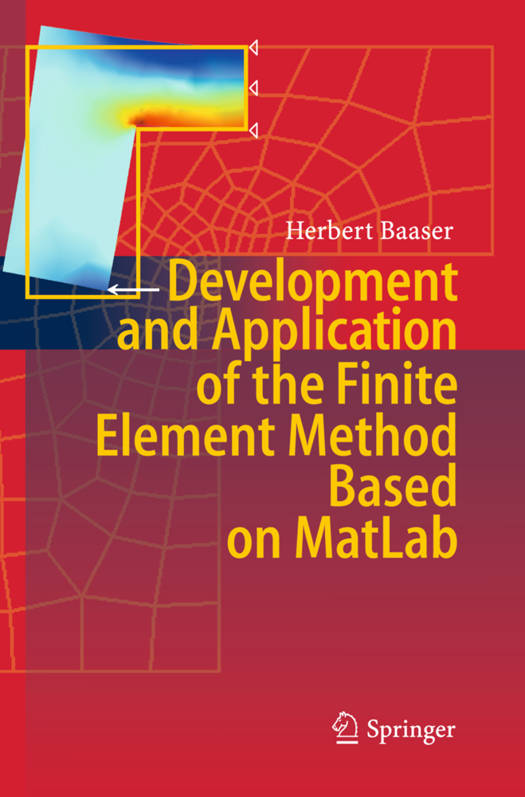
Development and Application of the Finite Element Method Based on MATLAB
Herbert Baaser
Hardcover | Engels
€ 106,95
+ 213 punten
Uitvoering
Eenvoudig bestellen
Veilig betalen


Gratis thuislevering vanaf € 30 (via bpost)
Gratis levering in je Standaard Boekhandel
Omschrijving
The intention of this booklet is a brief but general introduction into the treatment of the Finite Element Method (FEM). The FEM has become the leading method in computer-oriented mechanics, so that many scienti?c brancheshavegrownup besides overthelastdecades. Nevertheless, theFEM today is a question of economy. On the one hand its industrial application is forced to reduce product development costs and time, on the other hand a large number of commercial FEM codes and a still growing number of software for e?ective pre- and postprocessors are available in the meantime. Due to that, today it is a quite challenging task to operate with all these di?erent tools at the same time and to understand all handling and so- tion techniques developed over the last years. So, we want to help in getting a deeper insight into the main "interfaces" between the "customers of the FEM" and the codes itself by providing a totally open structured FE-code based on Matlab, which is a very powerful tool in operating with matrix based formulations. That idea and conditions forced us some years ago to initiateDAEdalon as a tool for general FE developments in research appli- tions. In spite of still existing high sophisticated - mostly commercial - FE codes, the success and the acceptance of such a structured tool justify that decision afterwards more and more.
Specificaties
Betrokkenen
- Auteur(s):
- Uitgeverij:
Inhoud
- Aantal bladzijden:
- 64
- Taal:
- Engels
Eigenschappen
- Productcode (EAN):
- 9783642131523
- Verschijningsdatum:
- 19/05/2010
- Uitvoering:
- Hardcover
- Formaat:
- Genaaid
- Afmetingen:
- 160 mm x 234 mm
- Gewicht:
- 249 g


Alleen bij Standaard Boekhandel
+ 213 punten op je klantenkaart van Standaard Boekhandel
CADEAU

AANGERADEN


Beoordelingen
We publiceren alleen reviews die voldoen aan de voorwaarden voor reviews. Bekijk onze voorwaarden voor reviews.