


- Afhalen na 1 uur in een winkel met voorraad
- Gratis thuislevering in België vanaf € 30
- Ruim aanbod met 7 miljoen producten
- Afhalen na 1 uur in een winkel met voorraad
- Gratis thuislevering in België vanaf € 30
- Ruim aanbod met 7 miljoen producten





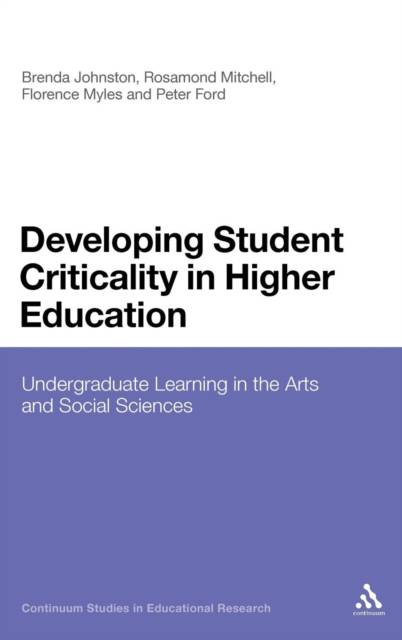
Developing Student Criticality in Higher Education
Undergraduate Learning in the Arts and Social Sciences
Brenda Johnston, Peter Ford, Rosamond Mitchell, Florence Myles
€ 440,95
+ 881 punten
Uitvoering
Omschrijving
Critical thinking is a major and enduring aspect of higher education and the development of criticality in students has long been a core aim. However, understandings of criticality are conceptually and empirically unclear. The book combines a well developed conceptual discussion of the nature of criticality appropriate for the twenty-first century, the extent to which it is attainable by arts and social science undergraduates, and the paths by which it is developed during students' higher education experiences. Drawing upon empirical accounts and case studies of teaching and learning in different disciplines, this book critically analyses higher education curriculum and policy documentation to explore higher educational processes, encouraging a re-evaluation of practice and educational values, and enabling the development of curricula which incorporate systematic attention to the development of student criticality. This book proposes a rounded conceptual vision of criticality in higher education for the twenty-first century.
Specificaties
Betrokkenen
- Auteur(s):
- Uitgeverij:
Inhoud
- Aantal bladzijden:
- 256
- Taal:
- Engels
- Reeks:
Eigenschappen
- Productcode (EAN):
- 9780826441171
- Verschijningsdatum:
- 26/05/2011
- Uitvoering:
- Hardcover
- Formaat:
- Genaaid
- Afmetingen:
- 156 mm x 234 mm
- Gewicht:
- 535 g


Alleen bij Standaard Boekhandel
+ 881 punten op je klantenkaart van Standaard Boekhandel
Cadeau

AANGERADEN


Beoordelingen
We publiceren alleen reviews die voldoen aan de voorwaarden voor reviews. Bekijk onze voorwaarden voor reviews.