


- Afhalen na 1 uur in een winkel met voorraad
- Gratis thuislevering in België vanaf € 30
- Ruim aanbod met 7 miljoen producten
- Afhalen na 1 uur in een winkel met voorraad
- Gratis thuislevering in België vanaf € 30
- Ruim aanbod met 7 miljoen producten





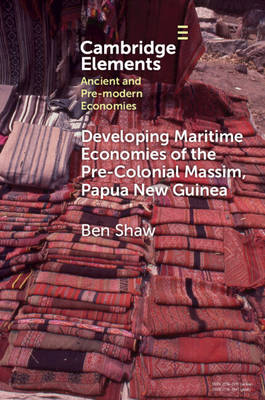
Developing Maritime Economies of the Pre-Colonial Massim, Papua New Guinea
The Making of an Island World and the Foundations of Kula
Ben Shaw
€ 24,45
+ 48 punten
Uitvoering
Omschrijving
The Massim region of Papua New Guinea has been the focus of intensive ethnographic interest for over a century because of sociocultural practices and maritime economies that connect island populations, including the famed Kula ring. Ethnographic models of Kula have been critiqued as ahistorical and heavily influenced by colonial interventions. This volume explores the long-term history of Massim maritime economies from a predominantly archaeological perspective, but draws on ethnographic, linguistic and biomolecular information. Maritime economies have connected islands for at least 17,000 years, with parallels to historically documented networks emerging over the last 3000 years. The Massim region can be considered as a network of decentralized, micro-world economies that frequently overlapped, were shaped by local value systems, clan affiliations, and defined by strategic advantages of location, natural resources and technologies. Maritime interaction in the Massim shaped cultural and linguistic diversity, providing a comparative case study for maritime economies globally.
Specificaties
Betrokkenen
- Auteur(s):
- Uitgeverij:
Inhoud
- Aantal bladzijden:
- 75
- Taal:
- Engels
- Reeks:
Eigenschappen
- Productcode (EAN):
- 9781009529600
- Verschijningsdatum:
- 31/07/2026
- Uitvoering:
- Paperback
- Formaat:
- Trade paperback (VS)


Alleen bij Standaard Boekhandel
+ 48 punten op je klantenkaart van Standaard Boekhandel
Cadeau

AANGERADEN


Beoordelingen
We publiceren alleen reviews die voldoen aan de voorwaarden voor reviews. Bekijk onze voorwaarden voor reviews.