


- Afhalen na 1 uur in een winkel met voorraad
- Gratis thuislevering in België vanaf € 30
- Ruim aanbod met 7 miljoen producten
- Afhalen na 1 uur in een winkel met voorraad
- Gratis thuislevering in België vanaf € 30
- Ruim aanbod met 7 miljoen producten





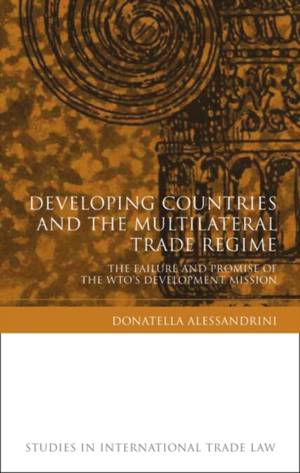
Developing Countries and the Multilateral Trade Regime
The Failure and Promise of the WTO's Development Mission
Donatella Alessandrini
€ 220,45
+ 440 punten
Omschrijving
This book explores the way in which 'development' has functioned within the multilateral trade regime since de-colonisation. In particular, it investigates the shift from early approaches to development under the GATT to current approaches to development under the WTO. It argues that a focus on the creation and transformation of a scientific apparatus that links forms of knowledge about the so-called Third World with forms of power and intervention is crucial for understanding the six decades long development enterprise of both the GATT and the WTO. The book is both topical and necessary given the emphasis on the current round of negotiations of the WTO. The Doha 'Development' Round has been premised on two assumptions. Firstly, that the international community has undertaken an unprecedented effort to address the imbalances of the multilateral trading regime with respect to the position of its developing country members. Secondly, that its successful conclusion represents an historic imperative and a political necessity for developing countries. Through a sustained analysis of the interaction between development thinking and trade practices, the book questions both assumptions by showing how development has always occupied a central position within the multilateral trading regime. Thus, rather than asking the question of what needs to be done in order to achieve 'development', the book examines the way in which development has operated and still operates to produce important, and often unacknowledged, power relations.
"Intense controversy surrounds the issue of the relationship between trade and development. This book is novel in examining the emergence of the international trade regime in the context of the history of the concept of development that may be traced back at least to the time of the League of Nations. This is a very welcome and original contribution to the field that should generate new discussions and understanding about the law of international trade."Antony Anghie, University of Utah
Specificaties
Betrokkenen
- Auteur(s):
- Uitgeverij:
Inhoud
- Aantal bladzijden:
- 254
- Taal:
- Engels
- Reeks:
Eigenschappen
- Productcode (EAN):
- 9781849460309
- Verschijningsdatum:
- 10/08/2010
- Uitvoering:
- Hardcover
- Formaat:
- Ongenaaid / garenloos gebonden
- Afmetingen:
- 157 mm x 234 mm
- Gewicht:
- 566 g


Alleen bij Standaard Boekhandel
+ 440 punten op je klantenkaart van Standaard Boekhandel

Beoordelingen
We publiceren alleen reviews die voldoen aan de voorwaarden voor reviews. Bekijk onze voorwaarden voor reviews.