


- Afhalen na 1 uur in een winkel met voorraad
- Gratis thuislevering in België vanaf € 30
- Ruim aanbod met 7 miljoen producten
- Afhalen na 1 uur in een winkel met voorraad
- Gratis thuislevering in België vanaf € 30
- Ruim aanbod met 7 miljoen producten




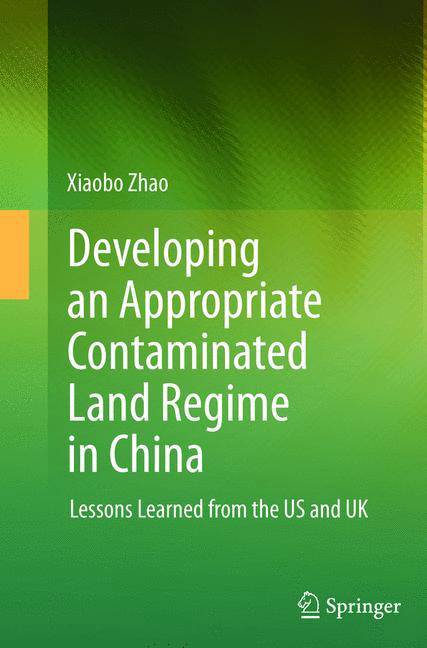
Developing an Appropriate Contaminated Land Regime in China
Lessons Learned from the US and UK
Xiaobo Zhao
Paperback | Engels
€ 171,95
Uitvoering
Omschrijving
Like all industrialized countries, China has encountered increasing problems with land contamination in recent years. Abandoned mining and manufacturing sites and obsolete industrial complexes, while also creating new polluting industrial enterprises, represent impending environmental threats. More importantly, a number of social and economic problems have developed and must be dealt with, in some cases urgently. Contaminated land laws and regulations have been established and have evolved in the US and UK and many other jurisdictions over the past few decades. These regimes have substantially influenced the relevant legislation in the context of numerous Asian and European countries and will inevitably benefit similar legislative efforts in China.
This book is the first monograph that focuses on how China can learn from the US and UK with respect to contaminated land legislation and comprehensively illustrates how contaminated land law could be created in China. It will be of interest to academics and practitioners in environmental law in China, as well as the US and UK.
This book is the first monograph that focuses on how China can learn from the US and UK with respect to contaminated land legislation and comprehensively illustrates how contaminated land law could be created in China. It will be of interest to academics and practitioners in environmental law in China, as well as the US and UK.
Specificaties
Betrokkenen
- Auteur(s):
- Uitgeverij:
Inhoud
- Aantal bladzijden:
- 298
- Taal:
- Engels
Eigenschappen
- Productcode (EAN):
- 9783642441592
- Verschijningsdatum:
- 28/01/2015
- Uitvoering:
- Paperback
- Afmetingen:
- 155 mm x 17 mm
- Gewicht:
- 492 g


Alleen bij Standaard Boekhandel
Cadeau

AANGERADEN


Beoordelingen
We publiceren alleen reviews die voldoen aan de voorwaarden voor reviews. Bekijk onze voorwaarden voor reviews.