


- Afhalen na 1 uur in een winkel met voorraad
- Gratis thuislevering in België vanaf € 30
- Ruim aanbod met 7 miljoen producten
- Afhalen na 1 uur in een winkel met voorraad
- Gratis thuislevering in België vanaf € 30
- Ruim aanbod met 7 miljoen producten




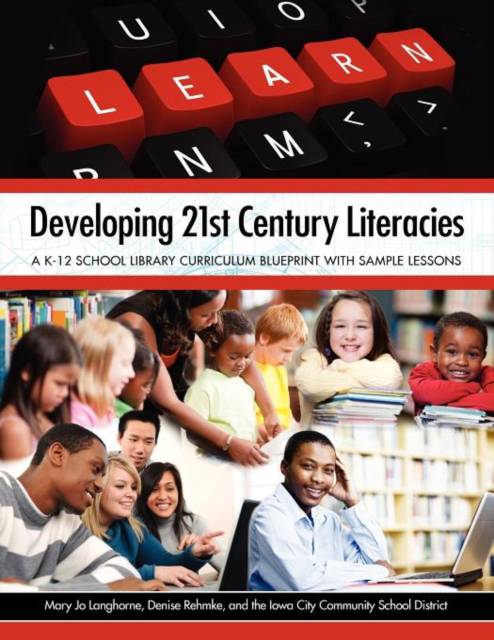
Developing 21st Century Literacies
A K-12 School Library Curriculum Blueprint with Sample Lessons
Mary Jo Langhorne, Denise Rehmke
Paperback | Engels
€ 127,45
+ 254 punten
Omschrijving
Here is a guide that shows you how to help students develop the critical thinking and learning skills necessary for effective and engaged citizens in the 21st Century. It provides tools and strategies to deliver a cutting-edge school library curriculum. Langhorne and Rehmke survey visual, technological, media, and information literacies, explore the concepts for learning with electronic formats, and expand the teacher librarian's role in school reading programs. All of the forms, lessons, and worksheets found in the book are just a sample of what is available on the website, all of it available for easy downloading. Part I of this book outlines the building blocks for creating a school library instructional program. Part II presents the curriculum blueprint developed in the Iowa City Community School District, including sample lessons and units. Like most curriculum documents, this one is organized around standards, benchmarks and objectives. Because school librarians have two major areas of responsibility for teaching, the content is also organized into two concept areas: literature and inquiry. The school librarian plays a critical role in the reading program of the school, both in supporting classroom reading instruction and in library teaching activities that enrich reading for students through exposure to various types of literature, literary elements and the work of respected authors. The literature component of this curriculum reflects the long-held belief that skillful reading is fundamental to all types of literacy. An inquiry-based approach involves students seeking multiple perspectives, working collaboratively with others, using information ethically and creatively, and developing dispositions for learning-curiosity, responsibility, persistence and independence. The following is a sampling of lessons provided in the printed version of the book. Many more are available on the website. - Alphabetical Order - Library Orientation - Sections of the Library - Book Care Kindergarten and - Book Parts - Selecting a Just Right Book - Using the Table of Contents in a Nonfiction Book to Locate Information - Using Nonfiction Book Elements to Locate Information - Identifying Elements of Setting - Identifying Elements of Character - Poetry - Fantasy: Characters - Exploring Historical Fiction, Biography, and Nonfiction through Baseball - Realistic Fiction - Types of Literature Review - Asking Questions of Text - Barbara O'Connor Author Study - Using Keywords to Find Online Information and Choosing Appropriate Sources - Basic Searching in the Library Catalog - Navigating Websites without Getting Lost - Evaluating Sources of Information - Using Non-fiction Text Structures to Improve Comprehension - Note Taking - Two Column Notetaking - Notetaking and Citation Using Index Cards - Creating a Beginning Bibliography - Producing a "New Directions" Movie
Specificaties
Betrokkenen
- Auteur(s):
- Uitgeverij:
Inhoud
- Aantal bladzijden:
- 242
- Taal:
- Engels
Eigenschappen
- Productcode (EAN):
- 9781555707521
- Verschijningsdatum:
- 30/09/2011
- Uitvoering:
- Paperback
- Formaat:
- Trade paperback (VS)
- Afmetingen:
- 216 mm x 279 mm
- Gewicht:
- 571 g


Alleen bij Standaard Boekhandel
+ 254 punten op je klantenkaart van Standaard Boekhandel
AANGERADEN


Beoordelingen
We publiceren alleen reviews die voldoen aan de voorwaarden voor reviews. Bekijk onze voorwaarden voor reviews.