


- Afhalen na 1 uur in een winkel met voorraad
- Gratis thuislevering in België vanaf € 30
- Ruim aanbod met 7 miljoen producten
- Afhalen na 1 uur in een winkel met voorraad
- Gratis thuislevering in België vanaf € 30
- Ruim aanbod met 7 miljoen producten





€ 112,95
+ 225 punten
Uitvoering
Eenvoudig bestellen
Veilig betalen


Gratis thuislevering vanaf € 30 (via bpost)
Gratis levering in je Standaard Boekhandel
Omschrijving
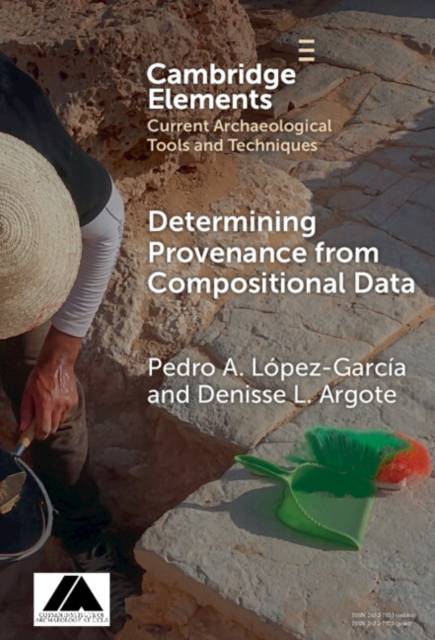
Traditionally, classical multivariate statistical methods have been applied to relate cultural materials recovered at archaeological sites to their respective raw material sources. However, when reviewing published research, which usually claims to have reached a high degree of confidence in the assignment of materials, the authors have detected that those applying these methods can make serious errors that compromise the inferences made. This Element reconsiders the use of statistical methods to address the problem of provenance analysis of archaeological materials using a step-by-step procedure that allows the recognition of natural groups in the data, thus obtaining better quality classifications while avoiding the problems of total or partial overlaps in the chemical groups (common in biplots). To evaluate the methods proposed here, the challenge of group search in ceramic materials is addressed using algorithms derived from model-based clustering. For cases with partial data labeling, a semi-supervised algorithm is applied to obsidian samples.
Specificaties
Betrokkenen
- Auteur(s):
- Uitgeverij:
Inhoud
- Aantal bladzijden:
- 86
- Taal:
- Engels
- Reeks:
Eigenschappen
- Productcode (EAN):
- 9781009634168
- Verschijningsdatum:
- 26/03/2026
- Uitvoering:
- Hardcover
- Formaat:
- Genaaid
- Afmetingen:
- 152 mm x 229 mm
- Gewicht:
- 285 g


Alleen bij Standaard Boekhandel
+ 225 punten op je klantenkaart van Standaard Boekhandel
CADEAU

AANGERADEN


Beoordelingen
We publiceren alleen reviews die voldoen aan de voorwaarden voor reviews. Bekijk onze voorwaarden voor reviews.