



Bedankt voor het vertrouwen het afgelopen jaar! Om jou te bedanken bieden we GRATIS verzending (in België) aan op alles gedurende de hele maand januari.
- Afhalen na 1 uur in een winkel met voorraad
- In januari gratis thuislevering in België
- Ruim aanbod met 7 miljoen producten
Bedankt voor het vertrouwen het afgelopen jaar! Om jou te bedanken bieden we GRATIS verzending (in België) aan op alles gedurende de hele maand januari.
- Afhalen na 1 uur in een winkel met voorraad
- In januari gratis thuislevering in België
- Ruim aanbod met 7 miljoen producten





€ 21,45
+ 42 punten
Uitvoering
Omschrijving
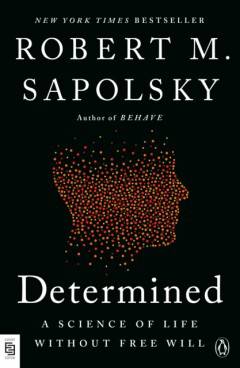
The instant New York Times bestseller
Excellent…Outstanding for its breadth of research, the liveliness of the writing, and the depth of humanity it conveys. - Wall Street Journal
One of our great behavioral scientists, the bestselling author of Behave , plumbs the depths of the science and philosophy of decision-making to mount a devastating case against free will, an argument with profound consequences
Robert Sapolskys Behave , his now classic account of why humans do good and why they do bad, pointed toward an unsettling conclusion: We may not grasp the precise marriage of nature and nurture that creates the physics and chemistry at the base of human behavior, but that doesnt mean it doesnt exist. Now, in Determined , Sapolsky takes his argument all the way, mounting a brilliant (and in his inimitable way, delightful) full-frontal assault on the pleasant fantasy that there is some separate self telling our biology what to do.
Determined offers a marvelous synthesis of what we know about how consciousness works—the tight weave between reason and emotion and between stimulus and response in the moment and over a life. One by one, Sapolsky tackles all the major arguments for free will and takes them out, cutting a path through the thickets of chaos and complexity science and quantum physics, as well as touching ground on some of the wild shores of philosophy. He shows us that the history of medicine is in no small part the history of learning that fewer and fewer things are somebodys fault; for example, for centuries we thought seizures were a sign of demonic possession.
Yet, as he acknowledges, its very hard, and at times impossible, to uncouple from our zeal to judge others and to judge ourselves. Sapolsky applies the new understanding of life beyond free will to some of our most essential questions around punishment, morality, and living well together. By the end, Sapolsky argues that while living our daily lives recognizing that we have no free will is going to be monumentally difficult, doing so is not going to result in anarchy, pointlessness, and existential malaise. Instead, it will make for a much more humane world.
Excellent…Outstanding for its breadth of research, the liveliness of the writing, and the depth of humanity it conveys. - Wall Street Journal
One of our great behavioral scientists, the bestselling author of Behave , plumbs the depths of the science and philosophy of decision-making to mount a devastating case against free will, an argument with profound consequences
Robert Sapolskys Behave , his now classic account of why humans do good and why they do bad, pointed toward an unsettling conclusion: We may not grasp the precise marriage of nature and nurture that creates the physics and chemistry at the base of human behavior, but that doesnt mean it doesnt exist. Now, in Determined , Sapolsky takes his argument all the way, mounting a brilliant (and in his inimitable way, delightful) full-frontal assault on the pleasant fantasy that there is some separate self telling our biology what to do.
Determined offers a marvelous synthesis of what we know about how consciousness works—the tight weave between reason and emotion and between stimulus and response in the moment and over a life. One by one, Sapolsky tackles all the major arguments for free will and takes them out, cutting a path through the thickets of chaos and complexity science and quantum physics, as well as touching ground on some of the wild shores of philosophy. He shows us that the history of medicine is in no small part the history of learning that fewer and fewer things are somebodys fault; for example, for centuries we thought seizures were a sign of demonic possession.
Yet, as he acknowledges, its very hard, and at times impossible, to uncouple from our zeal to judge others and to judge ourselves. Sapolsky applies the new understanding of life beyond free will to some of our most essential questions around punishment, morality, and living well together. By the end, Sapolsky argues that while living our daily lives recognizing that we have no free will is going to be monumentally difficult, doing so is not going to result in anarchy, pointlessness, and existential malaise. Instead, it will make for a much more humane world.
Specificaties
Betrokkenen
- Auteur(s):
- Uitgeverij:
Inhoud
- Aantal bladzijden:
- 528
- Taal:
- Engels
Eigenschappen
- Productcode (EAN):
- 9780593833339
- Verschijningsdatum:
- 16/04/2024
- Uitvoering:
- Paperback
- Afmetingen:
- 140 mm x 215 mm
- Gewicht:
- 441 g


Alleen bij Standaard Boekhandel
+ 42 punten op je klantenkaart van Standaard Boekhandel
SOLDEN


Beoordelingen
We publiceren alleen reviews die voldoen aan de voorwaarden voor reviews. Bekijk onze voorwaarden voor reviews.