


- Afhalen na 1 uur in een winkel met voorraad
- Gratis thuislevering in België vanaf € 30
- Ruim aanbod met 7 miljoen producten
- Afhalen na 1 uur in een winkel met voorraad
- Gratis thuislevering in België vanaf € 30
- Ruim aanbod met 7 miljoen producten





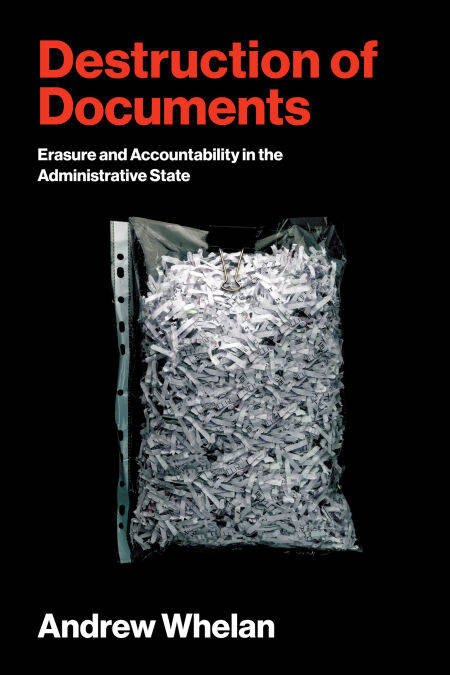
Destruction of Documents E-BOOK
Erasure and Accountability in the Administrative State
Andrew Whelan
€ 69,00
+ 69 punten
Uitvoering
Omschrijving
How deleted or destroyed paperwork impacts organizational capacity and memory—and allows power to evade accountability.
Administrative documents mediate bureaucracies and trust in them, making organizational life possible. In Destruction of Documents, Andrew Whelan argues that the politics of paperwork are most explicit when the paper trail is deleted, burned, shredded or otherwise done away with.
Exploring how irreconcilable administrative ideals have been understood across historical and cultural contexts, the author shows that the destruction of administrative documents both legitimates and conceals the organized irresponsibility of bureaucratic power.
From radical calls for liberation through burning the files to demands for their salvage in the service of justice, the book presents an analysis across four case studies: the Nechaev affair, an 1870s controversy concerning Russian revolutionaries; the shredding of files in the US Embassy in Tehran in 1979; the “right to be forgotten” in the contemporary data economy; and the 2018 scheduling of environmental records at the US National Archives. Across the case studies, the author describes how political power escapes accountability, and thereby secures continuity, by exceeding the material constraints of the media through which it operates. The destruction of bureaucratic media is thus central to how administrative authority is legitimated: renewing a tacit social contract while deferring its fulfillment.
Administrative documents mediate bureaucracies and trust in them, making organizational life possible. In Destruction of Documents, Andrew Whelan argues that the politics of paperwork are most explicit when the paper trail is deleted, burned, shredded or otherwise done away with.
Exploring how irreconcilable administrative ideals have been understood across historical and cultural contexts, the author shows that the destruction of administrative documents both legitimates and conceals the organized irresponsibility of bureaucratic power.
From radical calls for liberation through burning the files to demands for their salvage in the service of justice, the book presents an analysis across four case studies: the Nechaev affair, an 1870s controversy concerning Russian revolutionaries; the shredding of files in the US Embassy in Tehran in 1979; the “right to be forgotten” in the contemporary data economy; and the 2018 scheduling of environmental records at the US National Archives. Across the case studies, the author describes how political power escapes accountability, and thereby secures continuity, by exceeding the material constraints of the media through which it operates. The destruction of bureaucratic media is thus central to how administrative authority is legitimated: renewing a tacit social contract while deferring its fulfillment.
Specificaties
Betrokkenen
- Auteur(s):
- Uitgeverij:
Inhoud
- Aantal bladzijden:
- 280
- Taal:
- Engels
- Reeks:
Eigenschappen
- Productcode (EAN):
- 9780262055017
- Verschijningsdatum:
- 23/11/2026
- Uitvoering:
- E-book
- Beveiligd met:
- Adobe DRM
- Formaat:
- ePub


Alleen bij Standaard Boekhandel
+ 69 punten op je klantenkaart van Standaard Boekhandel
CADEAU

AANGERADEN


Beoordelingen
We publiceren alleen reviews die voldoen aan de voorwaarden voor reviews. Bekijk onze voorwaarden voor reviews.