


- Afhalen na 1 uur in een winkel met voorraad
- Gratis thuislevering in België vanaf € 30
- Ruim aanbod met 7 miljoen producten
- Afhalen na 1 uur in een winkel met voorraad
- Gratis thuislevering in België vanaf € 30
- Ruim aanbod met 7 miljoen producten





Omschrijving
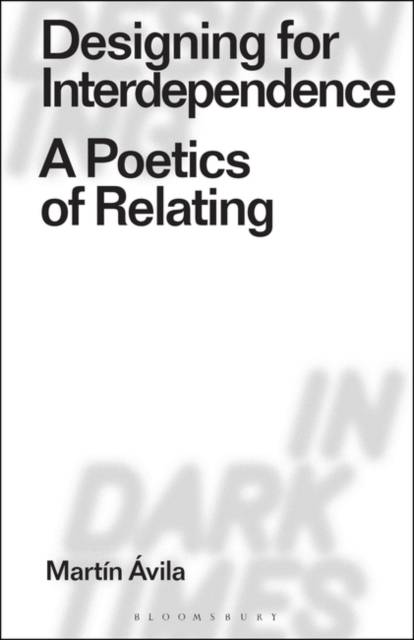
Challenging the dominant design paradigm that centres humanity in its practice, Designing for Interdependence puts forward an ecocentric mode of designing that privileges a harmonious relationship between all life forms that share our planet. This book is about the practice of designing and design's capacity to relate (or not) to beings of all kinds, human and others, in ways that are life-affirming.
Sensitive to power differentials and the responsibility that this entails, Martín Ávila develops the notion of alter-natives, a concept that exposes the alterity of artificial things and the potential of these things to participate in the sustainment of natural environments. He proposes a design practice that encompasses humans, artificial things and other-than-human species in a 'poetics of relating', and provides methods that support the rewilding necessary for maintaining cultural and biological diversity and the stabilization of planetary dynamics. The book features real-life project case studies that illustrate some of the political-ecological implications of an ecocentric paradigm, which can help us to imagine alternative modes of relating to local environments and alternative modes of inter-species cohabitation.
Avoiding dualistic thinking and the dichotomies harmful-benefit, construction-destruction, natural-artificial and life-death, Ávila pursues the work of caring for how our mattering through design can become constructive in creating more-than-human ecologies.
Sensitive to power differentials and the responsibility that this entails, Martín Ávila develops the notion of alter-natives, a concept that exposes the alterity of artificial things and the potential of these things to participate in the sustainment of natural environments. He proposes a design practice that encompasses humans, artificial things and other-than-human species in a 'poetics of relating', and provides methods that support the rewilding necessary for maintaining cultural and biological diversity and the stabilization of planetary dynamics. The book features real-life project case studies that illustrate some of the political-ecological implications of an ecocentric paradigm, which can help us to imagine alternative modes of relating to local environments and alternative modes of inter-species cohabitation.
Avoiding dualistic thinking and the dichotomies harmful-benefit, construction-destruction, natural-artificial and life-death, Ávila pursues the work of caring for how our mattering through design can become constructive in creating more-than-human ecologies.
Specificaties
Betrokkenen
- Auteur(s):
- Uitgeverij:
Inhoud
- Aantal bladzijden:
- 192
- Taal:
- Engels
- Reeks:
Eigenschappen
- Productcode (EAN):
- 9781350183742
- Verschijningsdatum:
- 17/11/2022
- Uitvoering:
- Hardcover
- Formaat:
- Genaaid
- Afmetingen:
- 127 mm x 203 mm
- Gewicht:
- 312 g


Alleen bij Standaard Boekhandel
+ 271 punten op je klantenkaart van Standaard Boekhandel
Cadeau

AANGERADEN


Beoordelingen
We publiceren alleen reviews die voldoen aan de voorwaarden voor reviews. Bekijk onze voorwaarden voor reviews.