


- Afhalen na 1 uur in een winkel met voorraad
- Gratis thuislevering in België vanaf € 30
- Ruim aanbod met 7 miljoen producten
- Afhalen na 1 uur in een winkel met voorraad
- Gratis thuislevering in België vanaf € 30
- Ruim aanbod met 7 miljoen producten





€ 154,45
+ 308 punten
Omschrijving
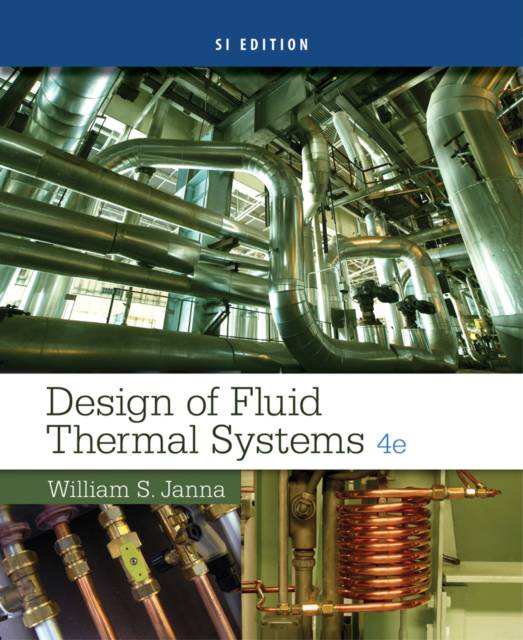
This book is designed to serve senior-level engineering students taking a capstone design course in fluid and thermal systems design. It is built from the ground up with the needs and interests of practicing engineers in mind; the emphasis is on practical applications. The book begins with a discussion of design methodology, including the process of bidding to obtain a project, and project management techniques. The text continues with an introductory overview of fluid thermal systems (a pump and pumping system, a household air conditioner, a baseboard heater, a water slide, and a vacuum cleaner are among the examples given), and a review of the properties of fluids and the equations of fluid mechanics. The text then offers an in-depth discussion of piping systems, including the economics of pipe size selection. Janna examines pumps (including net positive suction head considerations) and piping systems. He provides the reader with the ability to design an entire system for moving fluids that is efficient and cost-effective. Next, the book provides a review of basic heat transfer principles, and the analysis of heat exchangers, including double pipe, shell and tube, plate and frame cross flow heat exchangers. Design considerations for these exchangers are also discussed. The text concludes with a chapter of term projects that may be undertaken by teams of students.
Specificaties
Betrokkenen
- Auteur(s):
- Uitgeverij:
Inhoud
- Aantal bladzijden:
- 768
- Taal:
- Engels
Eigenschappen
- Productcode (EAN):
- 9781305076075
- Verschijningsdatum:
- 25/04/2014
- Uitvoering:
- Paperback
- Formaat:
- Trade paperback (VS)
- Afmetingen:
- 189 mm x 246 mm
- Gewicht:
- 1020 g



Alleen bij Standaard Boekhandel
+ 308 punten op je klantenkaart van Standaard Boekhandel
Cadeau

AANGERADEN


Beoordelingen
We publiceren alleen reviews die voldoen aan de voorwaarden voor reviews. Bekijk onze voorwaarden voor reviews.