


- Afhalen na 1 uur in een winkel met voorraad
- Gratis thuislevering in België vanaf € 30
- Ruim aanbod met 7 miljoen producten
- Afhalen na 1 uur in een winkel met voorraad
- Gratis thuislevering in België vanaf € 30
- Ruim aanbod met 7 miljoen producten





€ 55,95
+ 111 punten
Uitvoering
Omschrijving
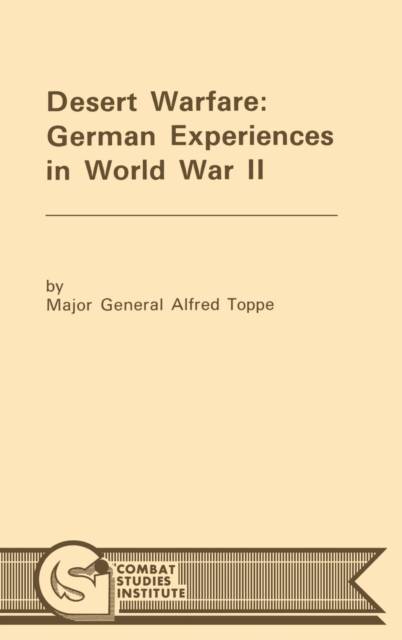
Firs published in 1991. "Desert Warfare: German Experiences in World War II" is an abridgment of a two-volume work that first appeared in 1952. Organized by Major General Alfred Toppe and written with the assistance of nine German commanders who served in North Africa, the manuscript represents a collaborative attempt to determine as many factors as possible which exerted a determining influence on desert warfare. Issues addressed include planning, intelligence, logistics, and operations. Described and analyzed are the German order of battle, the major military engagements in North Africa, and the particular problems of terrain and climate in desert operations. Not unlike many of the U.S. units engaged in the war with Iraq, the Germans in North Africa learned about combat operations in the desert only after they arrived on the scene and confronted the desert on its own terms. For this reason alone, as well as for the insights it offers, Desert Warfare requires the serious consideration of those responsible for preparing the U.S. military for any future conflict in desert terrain.
Specificaties
Betrokkenen
- Auteur(s):
- Uitgeverij:
Inhoud
- Aantal bladzijden:
- 114
- Taal:
- Engels
Eigenschappen
- Productcode (EAN):
- 9781839310720
- Verschijningsdatum:
- 01/03/2011
- Uitvoering:
- Hardcover
- Formaat:
- Genaaid
- Afmetingen:
- 152 mm x 229 mm
- Gewicht:
- 322 g



Alleen bij Standaard Boekhandel
+ 111 punten op je klantenkaart van Standaard Boekhandel
Cadeau

AANGERADEN


Beoordelingen
We publiceren alleen reviews die voldoen aan de voorwaarden voor reviews. Bekijk onze voorwaarden voor reviews.