


- Afhalen na 1 uur in een winkel met voorraad
- Gratis thuislevering in België vanaf € 30
- Ruim aanbod met 7 miljoen producten
- Afhalen na 1 uur in een winkel met voorraad
- Gratis thuislevering in België vanaf € 30
- Ruim aanbod met 7 miljoen producten





€ 23,95
+ 47 punten
Omschrijving
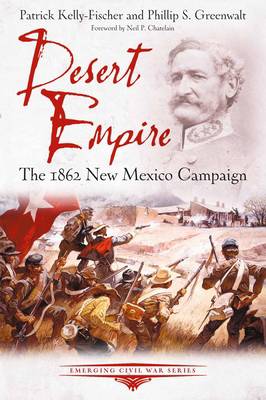
A detailed account of the overlooked 1862 New Mexico Campaign and Confederate ambitions in the Southwest.
In late July 1861, Lieutenant Colonel John Baylor and 258 Texas cavalrymen thundered into the small village of Mesilla, tucked along the Rio Grande River in the New Mexico Territory. They skirmished with U.S. Regulars seeking to retake the town and quickly forced them to retreat. It was a small victory that fueled visions of something much larger.
These Texans were the vanguard of the newly formed Confederacy, seeking to fulfill long-held Southern dreams of expanding their influence westward to the gold fields of the Rocky Mountains and the Pacific Ocean ports of Southern California: A Confederate version of Manifest Destiny from "sea to shining sea."
The fighting at Mesilla was the opening act of one of the least-studied campaigns of the Civil War. For the next year, troops from Texas, New Mexico, Colorado, Arizona, and California would fight for control of the Southwest, its gold, and a route to the Pacific. The campaign would comprise hard miles of marching, much of it through scorching desert and mountainous terrain, struggles within the Southern ranks, confrontations with local tribes, and important battles and skirmishes while the fate of the region (and some thought, the Confederacy) hung in the balance.
In Desert Empire, Emerging Civil War historians Patrick Kelly-Fischer and Phillip Greenwalt tackle the overlooked New Mexico Campaign of 1862 by exploring the men, battles, and politics that shaped the course of the war in the Southwest and the future of the region.
In late July 1861, Lieutenant Colonel John Baylor and 258 Texas cavalrymen thundered into the small village of Mesilla, tucked along the Rio Grande River in the New Mexico Territory. They skirmished with U.S. Regulars seeking to retake the town and quickly forced them to retreat. It was a small victory that fueled visions of something much larger.
These Texans were the vanguard of the newly formed Confederacy, seeking to fulfill long-held Southern dreams of expanding their influence westward to the gold fields of the Rocky Mountains and the Pacific Ocean ports of Southern California: A Confederate version of Manifest Destiny from "sea to shining sea."
The fighting at Mesilla was the opening act of one of the least-studied campaigns of the Civil War. For the next year, troops from Texas, New Mexico, Colorado, Arizona, and California would fight for control of the Southwest, its gold, and a route to the Pacific. The campaign would comprise hard miles of marching, much of it through scorching desert and mountainous terrain, struggles within the Southern ranks, confrontations with local tribes, and important battles and skirmishes while the fate of the region (and some thought, the Confederacy) hung in the balance.
In Desert Empire, Emerging Civil War historians Patrick Kelly-Fischer and Phillip Greenwalt tackle the overlooked New Mexico Campaign of 1862 by exploring the men, battles, and politics that shaped the course of the war in the Southwest and the future of the region.
Specificaties
Betrokkenen
- Auteur(s):
- Uitgeverij:
Inhoud
- Aantal bladzijden:
- 192
- Taal:
- Engels
- Reeks:
Eigenschappen
- Productcode (EAN):
- 9781611217759
- Verschijningsdatum:
- 15/03/2026
- Uitvoering:
- Paperback
- Formaat:
- Trade paperback (VS)
- Afmetingen:
- 152 mm x 228 mm
- Gewicht:
- 317 g


Alleen bij Standaard Boekhandel
+ 47 punten op je klantenkaart van Standaard Boekhandel
Cadeau

AANGERADEN


Beoordelingen
We publiceren alleen reviews die voldoen aan de voorwaarden voor reviews. Bekijk onze voorwaarden voor reviews.