


- Afhalen na 1 uur in een winkel met voorraad
- Gratis thuislevering in België vanaf € 30
- Ruim aanbod met 7 miljoen producten
- Afhalen na 1 uur in een winkel met voorraad
- Gratis thuislevering in België vanaf € 30
- Ruim aanbod met 7 miljoen producten





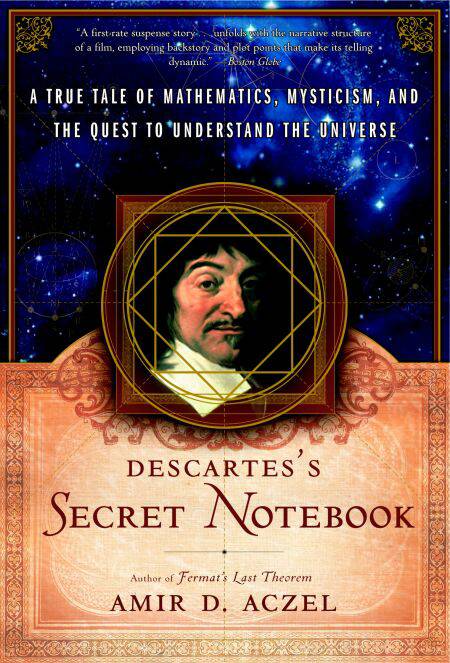
Descartes's Secret Notebook E-BOOK
A True Tale of Mathematics, Mysticism, and the Quest to Understand the Universe
Amir D. Aczel
E-book | Engels
€ 16,18
+ 16 punten
Uitvoering
Omschrijving
René Descartes (1596—1650) is one of the towering and central figures in Western philosophy and mathematics. His apothegm “Cogito, ergo sum” marked the birth of the mind-body problem, while his creation of so-called Cartesian coordinates has made our intellectual conquest of physical space possible.
But Descartes had a mysterious and mystical side, as well. Almost certainly a member of the occult brotherhood of the Rosicrucians, he kept a secret notebook, now lost, most of which was written in code. After Descartes’s death, Gottfried Leibniz, inventor of calculus and one of the greatest mathematicians of all time, moved to Paris in search of this notebook–and eventually found it in the possession of Claude Clerselier, a friend of Descartes’s. Liebniz called on Clerselier and was allowed to copy only a couple of pages–which, though written in code, he amazingly deciphered there on the spot. Liebniz’s hastily scribbled notes are all we have today of Descartes’s notebook.
Why did Descartes keep a secret notebook, and what were its contents? The answers to these questions will lead the reader on an exciting, swashbuckling journey, and offer a fascinating look at one of the great figures of Western culture.
But Descartes had a mysterious and mystical side, as well. Almost certainly a member of the occult brotherhood of the Rosicrucians, he kept a secret notebook, now lost, most of which was written in code. After Descartes’s death, Gottfried Leibniz, inventor of calculus and one of the greatest mathematicians of all time, moved to Paris in search of this notebook–and eventually found it in the possession of Claude Clerselier, a friend of Descartes’s. Liebniz called on Clerselier and was allowed to copy only a couple of pages–which, though written in code, he amazingly deciphered there on the spot. Liebniz’s hastily scribbled notes are all we have today of Descartes’s notebook.
Why did Descartes keep a secret notebook, and what were its contents? The answers to these questions will lead the reader on an exciting, swashbuckling journey, and offer a fascinating look at one of the great figures of Western culture.
Specificaties
Betrokkenen
- Auteur(s):
- Uitgeverij:
Inhoud
- Aantal bladzijden:
- 288
- Taal:
- Engels
Eigenschappen
- Productcode (EAN):
- 9780307494801
- Verschijningsdatum:
- 18/02/2009
- Uitvoering:
- E-book
- Beveiligd met:
- Adobe DRM
- Formaat:
- ePub



Alleen bij Standaard Boekhandel
+ 16 punten op je klantenkaart van Standaard Boekhandel
AANGERADEN


Beoordelingen
We publiceren alleen reviews die voldoen aan de voorwaarden voor reviews. Bekijk onze voorwaarden voor reviews.