


- Afhalen na 1 uur in een winkel met voorraad
- Gratis thuislevering in België vanaf € 30
- Ruim aanbod met 7 miljoen producten
- Afhalen na 1 uur in een winkel met voorraad
- Gratis thuislevering in België vanaf € 30
- Ruim aanbod met 7 miljoen producten





€ 67,95
+ 135 punten
Omschrijving
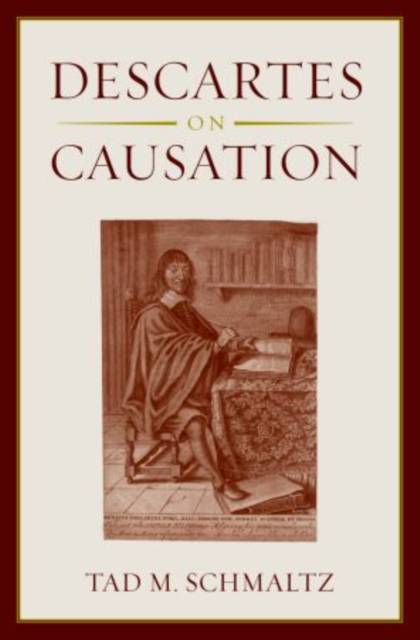
This book is a systematic study of Descartes' theory of causation and its relation to the medieval and early modern scholastic philosophy that provides its proper historical context. The argument presented here is that even though Descartes offered a dualistic ontology that differs radically from what we find in scholasticism, his views on causation were profoundly influenced by scholastic thought on this issue. This influence is evident not only in his affirmation in the Meditations of the abstract scholastic axioms that a cause must contain the reality of its effects and that conservation does not differ in reality from creation, but also in the details of the accounts of body-body interaction in his physics, of mind-body interaction in his psychology, and of the causation that he took to be involved in free human action. In contrast to those who have read Descartes as endorsing the "occasionalist" conclusion that God is the only real cause, a central thesis of this study is that he accepted what in the context of scholastic debates regarding causation is the antipode of occasionalism, namely, the view that creatures rather than God are the causal source of natural change. What emerges from the defense of this interpretation of Descartes is a new understanding of his contribution to modern thought on causation.
Specificaties
Betrokkenen
- Auteur(s):
- Uitgeverij:
Inhoud
- Aantal bladzijden:
- 250
- Taal:
- Engels
Eigenschappen
- Productcode (EAN):
- 9780199958504
- Verschijningsdatum:
- 1/01/2013
- Uitvoering:
- Paperback
- Formaat:
- Trade paperback (VS)
- Afmetingen:
- 155 mm x 231 mm
- Gewicht:
- 362 g



Alleen bij Standaard Boekhandel
+ 135 punten op je klantenkaart van Standaard Boekhandel
Cadeau

AANGERADEN


Beoordelingen
We publiceren alleen reviews die voldoen aan de voorwaarden voor reviews. Bekijk onze voorwaarden voor reviews.