


- Afhalen na 1 uur in een winkel met voorraad
- Gratis thuislevering in België vanaf € 30
- Ruim aanbod met 7 miljoen producten
- Afhalen na 1 uur in een winkel met voorraad
- Gratis thuislevering in België vanaf € 30
- Ruim aanbod met 7 miljoen producten





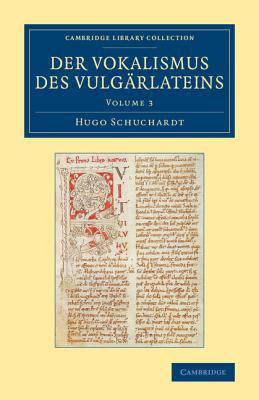
Der Vokalismus Des Vulgärlateins
Hugo Schuchardt
€ 88,95
+ 177 punten
Uitvoering
Eenvoudig bestellen
Veilig betalen


Gratis thuislevering vanaf € 30 (via bpost)
Gratis levering in je Standaard Boekhandel
Omschrijving
The German linguist Hugo Schuchardt (1842-1927) made significant contributions to the study of the Basque and Romance languages, publishing also on pidgins and creoles. A critic of the Neogrammarian hypothesis of sound laws, he subscribed to the 'wave model' of language change. His Über die Lautgesetze: Gegen die Junggrammatiker (1885) has been reissued in this series in a volume with Die Verwantschaftsverhältnisse der indogermanischen Sprachen (1872) by Johannes Schmidt (1843-1901). Based on Schuchardt's doctoral dissertation and the painstaking study of extant sources, the present three-volume work appeared between 1866 and 1868. He explores here the development and characteristics of Vulgar Latin, the language of the general population, as opposed to the classical, literary variety. The work focuses on the distinctive vowel changes that took place in Romance vernaculars over many centuries. Volume 3 (1868) is a supplement to the first two volumes and includes corrections.
Specificaties
Betrokkenen
- Auteur(s):
- Uitgeverij:
Inhoud
- Aantal bladzijden:
- 366
- Taal:
- Duits
- Reeks:
Eigenschappen
- Productcode (EAN):
- 9781108063869
- Verschijningsdatum:
- 20/03/2014
- Uitvoering:
- Paperback
- Formaat:
- Trade paperback (VS)
- Afmetingen:
- 140 mm x 216 mm
- Gewicht:
- 462 g


Alleen bij Standaard Boekhandel
+ 177 punten op je klantenkaart van Standaard Boekhandel
CADEAU

AANGERADEN


Beoordelingen
We publiceren alleen reviews die voldoen aan de voorwaarden voor reviews. Bekijk onze voorwaarden voor reviews.