


- Afhalen na 1 uur in een winkel met voorraad
- Gratis thuislevering in België vanaf € 30
- Ruim aanbod met 7 miljoen producten
- Afhalen na 1 uur in een winkel met voorraad
- Gratis thuislevering in België vanaf € 30
- Ruim aanbod met 7 miljoen producten





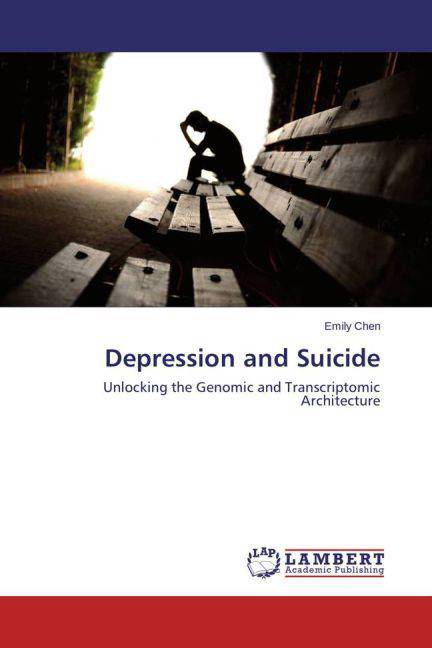
Depression and Suicide
Unlocking the Genomic and Transcriptomic Architecture
Emily Chen
Paperback | Engels
€ 39,45
+ 78 punten
Eenvoudig bestellen
Veilig betalen


Gratis thuislevering vanaf € 30 (via bpost)
Gratis levering in je Standaard Boekhandel
Omschrijving
Major depressive disorder (MDD) is one of the most challenging psychiatric disorders to study. It is a polygenic disorder that has a lifetime incidence of 10-15%, with women affected twice as often as men, for unknown reasons. The high lifetime prevalence of this non-infectious but debilitating disorder necessitates progress in this field so that better therapeutic drugs can be developed to more effectively treat patients. Genome-wide association studies on major depression have yet to produce significant findings. This is likely because the effects of individual loci are small and/or because the heterogeneity of the disease is high. The involvement of non-genetic factors such as environmental variables is an additional complicating factor. As a result, the deciphering of the genetic architecture is difficult. While both genes and the environment are factors in the development of MDD, this book will focus on the genetics of the disorder. There is an urgent need to understand the genetic basis of MDD and it is our goal to accomplish this by using next-generation sequencing to discover the genomic variants and dysregulated genes that play a role in its development.
Specificaties
Betrokkenen
- Auteur(s):
- Uitgeverij:
Inhoud
- Aantal bladzijden:
- 112
- Taal:
- Engels
Eigenschappen
- Productcode (EAN):
- 9783659770968
- Verschijningsdatum:
- 19/08/2015
- Uitvoering:
- Paperback
- Afmetingen:
- 150 mm x 220 mm
- Gewicht:
- 165 g



Alleen bij Standaard Boekhandel
+ 78 punten op je klantenkaart van Standaard Boekhandel
CADEAU

AANGERADEN


Beoordelingen
We publiceren alleen reviews die voldoen aan de voorwaarden voor reviews. Bekijk onze voorwaarden voor reviews.