


- Afhalen na 1 uur in een winkel met voorraad
- Gratis thuislevering in België vanaf € 30
- Ruim aanbod met 7 miljoen producten
- Afhalen na 1 uur in een winkel met voorraad
- Gratis thuislevering in België vanaf € 30
- Ruim aanbod met 7 miljoen producten





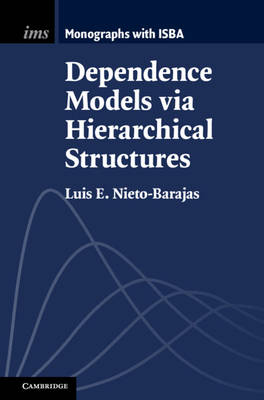
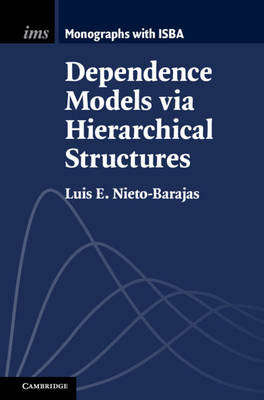
Dependence Models via Hierarchical Structures
Luis E Nieto-Barajas
€ 100,95
+ 201 punten
Eenvoudig bestellen
Veilig betalen


Gratis thuislevering vanaf € 30 (via bpost)
Gratis levering in je Standaard Boekhandel
Omschrijving
Bringing together years of research into one useful resource, this text empowers the reader to creatively construct their own dependence models. Intended for senior undergraduate and postgraduate students, it takes a step-by-step look at the construction of specific dependence models, including exchangeable, Markov, moving average and, in general, spatio-temporal models. All constructions maintain a desired property of pre-specifying the marginal distribution and keeping it invariant. They do not separate the dependence from the marginals and the mechanisms followed to induce dependence are so general that they can be applied to a very large class of parametric distributions. All the constructions are based on appropriate definitions of three building blocks: prior distribution, likelihood function and posterior distribution, in a Bayesian analysis context. All results are illustrated with examples and graphical representations. Applications with data and code are interspersed throughout the book, covering fields including insurance and epidemiology.
Specificaties
Betrokkenen
- Auteur(s):
- Uitgeverij:
Inhoud
- Aantal bladzijden:
- 149
- Taal:
- Engels
- Reeks:
- Reeksnummer:
- nr. 10
Eigenschappen
- Productcode (EAN):
- 9781009584111
- Verschijningsdatum:
- 27/03/2025
- Uitvoering:
- Hardcover
- Formaat:
- Genaaid
- Afmetingen:
- 152 mm x 229 mm
- Gewicht:
- 371 g


Alleen bij Standaard Boekhandel
+ 201 punten op je klantenkaart van Standaard Boekhandel
CADEAU

AANGERADEN


Beoordelingen
We publiceren alleen reviews die voldoen aan de voorwaarden voor reviews. Bekijk onze voorwaarden voor reviews.