


- Afhalen na 1 uur in een winkel met voorraad
- Gratis thuislevering in België vanaf € 30
- Ruim aanbod met 7 miljoen producten
- Afhalen na 1 uur in een winkel met voorraad
- Gratis thuislevering in België vanaf € 30
- Ruim aanbod met 7 miljoen producten





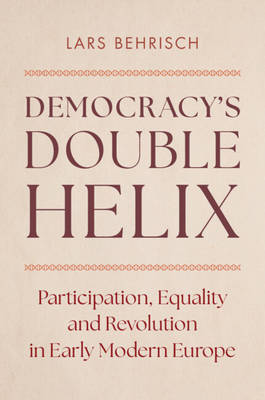
Democracy's Double Helix
Participation, Equality and Revolution in Early Modern Europe
Lars Behrisch
Hardcover | Engels
€ 64,95
+ 129 punten
Omschrijving
Where does our modern democracy come from? It is a composite of two very different things: a medieval tradition of political participation, pluralistic but highly elitist; and the notion of individual equality, emerging during the early modern period. These two things first converged in the American and French revolutions - a convergence that was not only unexpected and unplanned but has remained fragile to this day. Democracy's Double Helix does not simply project and trace our modern democracy back into history, assuming that it was bound to come about. It looks instead at the political practices and attitudes prevailing before its emergence. From this perspective, it becomes clear that there was little to predict the coming of democracy. It also becomes clear that the two historical trajectories that formed it obey very different logics and always remain in tension. From this genuinely historical vantage point, we can therefore better understand the nature of our democracy and its current crisis.
Specificaties
Betrokkenen
- Auteur(s):
- Uitgeverij:
Inhoud
- Aantal bladzijden:
- 344
- Taal:
- Engels
Eigenschappen
- Productcode (EAN):
- 9781316516317
- Verschijningsdatum:
- 14/08/2025
- Uitvoering:
- Hardcover
- Formaat:
- Genaaid
- Afmetingen:
- 155 mm x 119 mm
- Gewicht:
- 635 g


Alleen bij Standaard Boekhandel
+ 129 punten op je klantenkaart van Standaard Boekhandel
AANGERADEN


Beoordelingen
We publiceren alleen reviews die voldoen aan de voorwaarden voor reviews. Bekijk onze voorwaarden voor reviews.