Standaard Boekhandel gebruikt cookies en gelijkaardige technologieën om de website goed te laten werken en je een betere surfervaring te bezorgen.
Hieronder kan je kiezen welke cookies je wilt inschakelen:
Technische en functionele cookies
Deze cookies zijn essentieel om de website goed te laten functioneren, en laten je toe om bijvoorbeeld in te loggen. Je kan deze cookies niet uitschakelen.
Analytische cookies
Deze cookies verzamelen anonieme informatie over het gebruik van onze website. Op die manier kunnen we de website beter afstemmen op de behoeften van de gebruikers.
Marketingcookies
Deze cookies delen je gedrag op onze website met externe partijen, zodat je op externe platformen relevantere advertenties van Standaard Boekhandel te zien krijgt.
Je cadeautjes zeker op tijd in huis hebben voor de feestdagen? Kom langs in onze winkels en vind het perfecte geschenk!
Afhalen na 1 uur in een winkel met voorraad
Gratis thuislevering in België vanaf € 30
Ruim aanbod met 7 miljoen producten
Je cadeautjes zeker op tijd in huis hebben voor de feestdagen? Kom langs in onze winkels en vind het perfecte geschenk!
Je kan maximaal 250 producten tegelijk aan je winkelmandje toevoegen. Verwijdere enkele producten uit je winkelmandje, of splits je bestelling op in meerdere bestellingen.
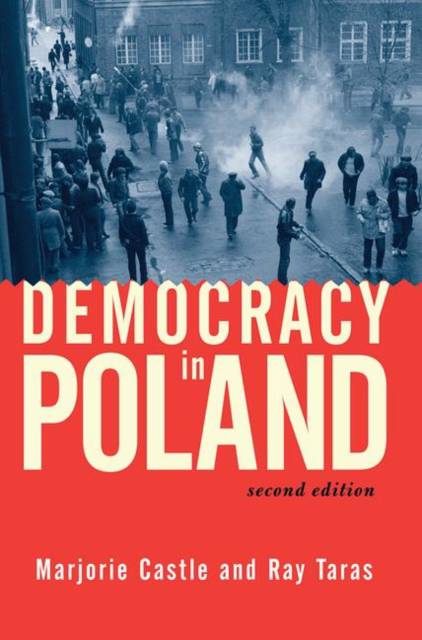
Ever-changing election rules, a highly fluid party system, a constitution considered illegitimate by more than one major political actor, polarized political elites, and a system of corruption that has grown up together with the young democracy itself -these characterize contemporary Polish politics. At the same time Poland is frequently identified as the most successful example of a transition from communism to capitalism, having led this series of world-changing transitions. It has distanced itself from a turbulent history as pawn in Eastern Europe's international politics to become a leading candidate for membership in the exclusive European Union club. As Polish democratic politics evolves it is taking unexpected forms and producing equally unexpected results.Through a comprehensive analysis of politics in this young European democracy, Marjorie Castle and Ray Taras explain the complexity and uncertainty of political processes and outcomes in Poland. Poland'spast -the flawed Second Republic established after World War I, as well as the imperfect independence in the Soviet shadow following World War II's devastation - dramatizes the unique historic opportunity it was given in 1989 to determine its own political future and perhaps eventually become a major European power. Choices made in 1989 and thereafter would not only construct a new democracy but shape and limit its possibilities. The primary focus here is on contemporary politics: what the fundamental political cleavages are, whether parties adequately represent popular interests, who the political elites are and what games they play, whatinfluence the Catholic Church still holds in an aspiring Western-style secular republic, and what policy challenges face Poland in the future. Inimitable political leaders, changing political arenas, and complexpolicy-making processes come to life through a fascinating narrative characterized by an insider's insight.