



Je cadeautjes zeker op tijd in huis hebben voor de feestdagen? Kom langs in onze winkels en vind het perfecte geschenk!
- Afhalen na 1 uur in een winkel met voorraad
- Gratis thuislevering in België vanaf € 30
- Ruim aanbod met 7 miljoen producten
Je cadeautjes zeker op tijd in huis hebben voor de feestdagen? Kom langs in onze winkels en vind het perfecte geschenk!
- Afhalen na 1 uur in een winkel met voorraad
- Gratis thuislevering in België vanaf € 30
- Ruim aanbod met 7 miljoen producten





Omschrijving
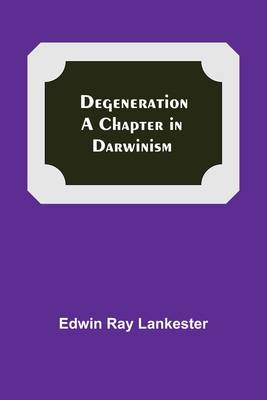
A provocative lens on evolution, written with clarity and care that still resonates today. Degeneration: A Chapter In Darwinism opens a door into late Victorian Britain, where science and society walk hand in hand and big questions about heredity, variation, and the meaning of progress unfold with absorbing immediacy. This compact yet substantial work acts as a scientific treatise and a biological essay rolled into one accessible volume. It surveys degeneration in evolution with rigour, while offering a natural history essay's insistence on observation, curiosity, and human consequence. Lankester's examination of heredity and variation sits at the heart of Victorian evolutionary thought, and the book's careful analysis of how science shapes social life makes it a compelling general reader overview as well as an indispensable academic study guide for students and teachers. Its literary and historical significance is enduring: a touchstone in British scientific culture that illuminates how scholars, clinicians and poets alike were asking what evolution meant for society. For casual readers and classic-literature collectors alike, this is more than a reprint-it is a restored cultural treasure, out of print for decades and now revived by Alpha Editions to engage today's readers and future generations. A careful, priceless addition to any library.
Specificaties
Betrokkenen
- Auteur(s):
- Uitgeverij:
Inhoud
- Aantal bladzijden:
- 44
- Taal:
- Engels
Eigenschappen
- Productcode (EAN):
- 9789354755316
- Verschijningsdatum:
- 5/07/2021
- Uitvoering:
- Paperback
- Formaat:
- Trade paperback (VS)
- Afmetingen:
- 152 mm x 229 mm
- Gewicht:
- 77 g


Alleen bij Standaard Boekhandel
+ 54 punten op je klantenkaart van Standaard Boekhandel
CADEAU


Beoordelingen
We publiceren alleen reviews die voldoen aan de voorwaarden voor reviews. Bekijk onze voorwaarden voor reviews.