


- Afhalen na 1 uur in een winkel met voorraad
- Gratis thuislevering in België vanaf € 30
- Ruim aanbod met 7 miljoen producten
- Afhalen na 1 uur in een winkel met voorraad
- Gratis thuislevering in België vanaf € 30
- Ruim aanbod met 7 miljoen producten





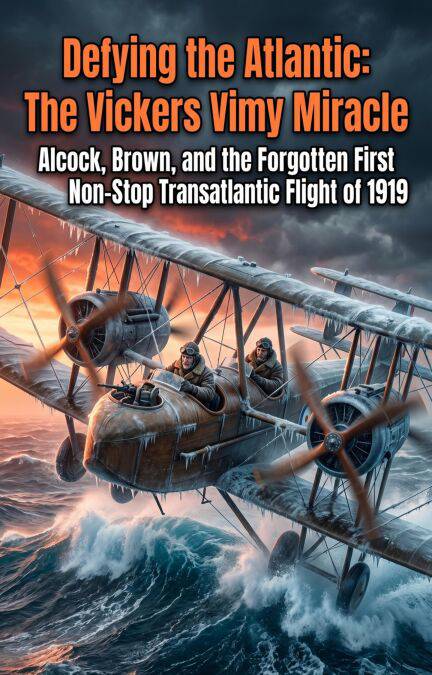
Defying the Atlantic: The Vickers Vimy Miracle E-BOOK
Alcock, Brown, and the Forgotten First Non-Stop Transatlantic Flight of 1919
James Harrison
E-book | Engels
€ 4,99
+ 4 punten
Omschrijving
Eight years before Charles Lindbergh became a global icon for crossing the Atlantic, two British aviators completed the exact same impossible journey in an open-cockpit, modified World War I bomber made of wood and canvas. The 1919 flight of John Alcock and Arthur Brown remains one of the most daring and criminally overlooked achievements in aviation history.
Taking off from a rocky field in Newfoundland, the duo faced immediate, catastrophic failures. Their radio broke, stripping them of all communication. Their heating suits failed in the open, freezing air. Flying through blinding fog and dense snowstorms, the Vickers Vimy bomber became entirely encased in ice. At one point, Brown had to physically climb out onto the slippery, freezing wings mid-flight to manually chip ice out of the engine intakes to prevent the plane from plummeting into the sea. After sixteen hours of absolute terror, they crash-landed nose-first into an Irish bog, surviving to claim the £10,000 Daily Mail prize.
This gripping historical narrative reclaims a forgotten aerospace milestone. It explores the post-war race to conquer the oceans, the primitive, terrifying reality of early celestial navigation, and the sheer human endurance required to fly blind across the abyss.
Revisit the true dawn of transcontinental flight. The Vickers Vimy Miracle proves that the greatest aerospace achievements were built not on computers, but on canvas, wire, and absolute desperation.
Taking off from a rocky field in Newfoundland, the duo faced immediate, catastrophic failures. Their radio broke, stripping them of all communication. Their heating suits failed in the open, freezing air. Flying through blinding fog and dense snowstorms, the Vickers Vimy bomber became entirely encased in ice. At one point, Brown had to physically climb out onto the slippery, freezing wings mid-flight to manually chip ice out of the engine intakes to prevent the plane from plummeting into the sea. After sixteen hours of absolute terror, they crash-landed nose-first into an Irish bog, surviving to claim the £10,000 Daily Mail prize.
This gripping historical narrative reclaims a forgotten aerospace milestone. It explores the post-war race to conquer the oceans, the primitive, terrifying reality of early celestial navigation, and the sheer human endurance required to fly blind across the abyss.
Revisit the true dawn of transcontinental flight. The Vickers Vimy Miracle proves that the greatest aerospace achievements were built not on computers, but on canvas, wire, and absolute desperation.
Specificaties
Betrokkenen
- Auteur(s):
- Uitgeverij:
Inhoud
- Aantal bladzijden:
- 207
- Taal:
- Engels
Eigenschappen
- Productcode (EAN):
- 9783565458783
- Verschijningsdatum:
- 24/05/2026
- Uitvoering:
- E-book
- Formaat:
- ePub


Alleen bij Standaard Boekhandel
+ 4 punten op je klantenkaart van Standaard Boekhandel
Cadeau

AANGERADEN


Beoordelingen
We publiceren alleen reviews die voldoen aan de voorwaarden voor reviews. Bekijk onze voorwaarden voor reviews.