


- Afhalen na 1 uur in een winkel met voorraad
- Gratis thuislevering in België vanaf € 30
- Ruim aanbod met 7 miljoen producten
- Afhalen na 1 uur in een winkel met voorraad
- Gratis thuislevering in België vanaf € 30
- Ruim aanbod met 7 miljoen producten





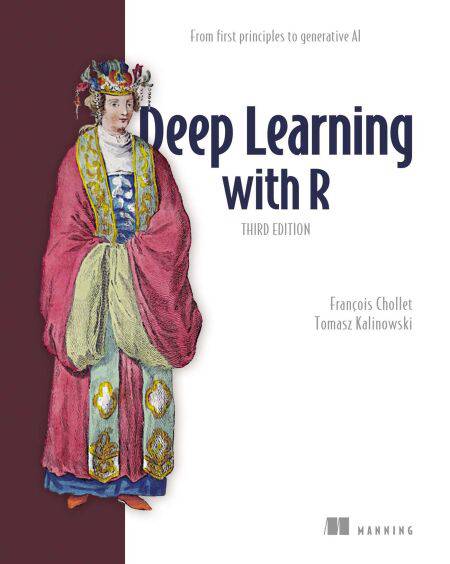
Deep Learning with R, Third Edition E-BOOK
From first principles to generative AI
François Chollet, Tomasz Kalinowski
E-book | Engels
€ 64,86
+ 64 punten
Uitvoering
Omschrijving
Get the eBook free when you register your print book at Manning.
This book introduces deep learning from scratch with examples that use the R language and the Keras library. Each chapter offers practical code examples that build your understanding of deep learning layer by layer. You’ll appreciate the intuitive explanations, crisp illustrations, and clear examples. In this expanded third edition you’ll find fresh chapters on the transformers architecture, building your own GPT-like large language model, and image generation with diffusion models. Plus, even DL veterans will benefit from the insightful explanations on the nature of deep learning.
For R programmers, the R interface to the Keras deep learning library is a powerful head start on building deep learning models without switching to Python. It provides a simple, consistent API that makes deep learning accessible and simplifies the process of building neural networks, even if you have no prior experience in advanced machine learning.
In Deep Learning with R, Third Edition you will learn:
• Deep learning from first principles
• The latest features of Keras
• Image classification and image segmentation
• Time series forecasting
• Text classification and machine translation
• Text and image generation—build your own LLMs and diffusion models!
• Scaling and tuning models
About the technology
Deep Learning with R, Third Edition is a practical, concept-driven introduction to modern deep learning for R users. With a focus on clarity, intuition, and hands-on experimentation, it guides you from the foundations of deep learning to advanced architectures such as transformers and LLMs. This book treats R as a fully capable environment for modern deep learning, showing how contemporary models and workflows can be developed end to end without compromise.
About the book
Deep Learning with R, Third Edition gets you up to speed with the current state of deep learning practice. Using Keras 3 with R, you’ll build and train neural networks from scratch, work with transformers, fine-tune pretrained models and explore large language models and diffusion-based image generation. By following carefully constructed examples that build insight step-by-step, you’ll develop a deep understanding of why these models work—not just how to use them.
What's inside
• Hands-on, code-first learning in R
• A clear progression from deep learning fundamentals to generative AI
• Examples that emphasize intuition and understanding
About the reader
For readers with intermediate R skills. No prior experience with deep learning is required.
About the author
François Chollet is the creator of Keras and author of Deep Learning with Python. Tomasz Kalinowski is a software engineer at Posit Software, PBC and maintainer of the Keras and TensorFlow R packages.
Table of Contents
1 What is deep learning?
2 The mathematical building blocks of neural networks
3 Introduction to TensorFlow, PyTorch, JAX, and Keras
4 Classification and regression
5 Fundamentals of machine learning
6 The universal workflow of machine learning
7 A deep dive into Keras
8 Image classification
9 Convnet architecture patterns
10 Interpreting what convnets learn
11 Image segmentation
12 Object detection
13 Timeseries forecasting
14 Text classification
15 Language models and the Transformer
16 Text generation
17 Image generation
18 Best practices for the real world
19 The future of AI
20 Conclusions
This book introduces deep learning from scratch with examples that use the R language and the Keras library. Each chapter offers practical code examples that build your understanding of deep learning layer by layer. You’ll appreciate the intuitive explanations, crisp illustrations, and clear examples. In this expanded third edition you’ll find fresh chapters on the transformers architecture, building your own GPT-like large language model, and image generation with diffusion models. Plus, even DL veterans will benefit from the insightful explanations on the nature of deep learning.
For R programmers, the R interface to the Keras deep learning library is a powerful head start on building deep learning models without switching to Python. It provides a simple, consistent API that makes deep learning accessible and simplifies the process of building neural networks, even if you have no prior experience in advanced machine learning.
In Deep Learning with R, Third Edition you will learn:
• Deep learning from first principles
• The latest features of Keras
• Image classification and image segmentation
• Time series forecasting
• Text classification and machine translation
• Text and image generation—build your own LLMs and diffusion models!
• Scaling and tuning models
About the technology
Deep Learning with R, Third Edition is a practical, concept-driven introduction to modern deep learning for R users. With a focus on clarity, intuition, and hands-on experimentation, it guides you from the foundations of deep learning to advanced architectures such as transformers and LLMs. This book treats R as a fully capable environment for modern deep learning, showing how contemporary models and workflows can be developed end to end without compromise.
About the book
Deep Learning with R, Third Edition gets you up to speed with the current state of deep learning practice. Using Keras 3 with R, you’ll build and train neural networks from scratch, work with transformers, fine-tune pretrained models and explore large language models and diffusion-based image generation. By following carefully constructed examples that build insight step-by-step, you’ll develop a deep understanding of why these models work—not just how to use them.
What's inside
• Hands-on, code-first learning in R
• A clear progression from deep learning fundamentals to generative AI
• Examples that emphasize intuition and understanding
About the reader
For readers with intermediate R skills. No prior experience with deep learning is required.
About the author
François Chollet is the creator of Keras and author of Deep Learning with Python. Tomasz Kalinowski is a software engineer at Posit Software, PBC and maintainer of the Keras and TensorFlow R packages.
Table of Contents
1 What is deep learning?
2 The mathematical building blocks of neural networks
3 Introduction to TensorFlow, PyTorch, JAX, and Keras
4 Classification and regression
5 Fundamentals of machine learning
6 The universal workflow of machine learning
7 A deep dive into Keras
8 Image classification
9 Convnet architecture patterns
10 Interpreting what convnets learn
11 Image segmentation
12 Object detection
13 Timeseries forecasting
14 Text classification
15 Language models and the Transformer
16 Text generation
17 Image generation
18 Best practices for the real world
19 The future of AI
20 Conclusions
Specificaties
Betrokkenen
- Auteur(s):
- Uitgeverij:
Inhoud
- Aantal bladzijden:
- 648
- Taal:
- Engels
Eigenschappen
- Productcode (EAN):
- 9781638357988
- Verschijningsdatum:
- 8/06/2026
- Uitvoering:
- E-book
- Beveiligd met:
- Adobe DRM
- Formaat:
- ePub


Alleen bij Standaard Boekhandel
+ 64 punten op je klantenkaart van Standaard Boekhandel
Cadeau

AANGERADEN


Beoordelingen
We publiceren alleen reviews die voldoen aan de voorwaarden voor reviews. Bekijk onze voorwaarden voor reviews.