



Je cadeautjes zeker op tijd in huis hebben voor de feestdagen? Kom langs in onze winkels en vind het perfecte geschenk!
- Afhalen na 1 uur in een winkel met voorraad
- Gratis thuislevering in België vanaf € 30
- Ruim aanbod met 7 miljoen producten
Je cadeautjes zeker op tijd in huis hebben voor de feestdagen? Kom langs in onze winkels en vind het perfecte geschenk!
- Afhalen na 1 uur in een winkel met voorraad
- Gratis thuislevering in België vanaf € 30
- Ruim aanbod met 7 miljoen producten





€ 381,95
+ 763 punten
Uitvoering
Omschrijving
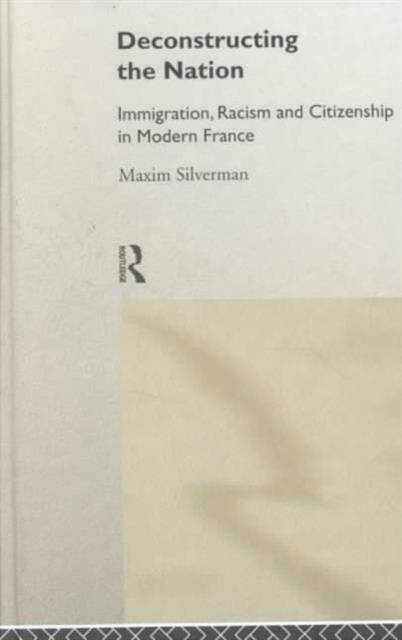
Deconstructing the Nation examines the connection between racism and the development of the nation-state in modern France. The author raises important questions about the nature of citizenship rights in modern French society and contributes to wider European debates on citizenship. By challenging the myths of the modern French nation Maxim Silverman opens up the debate on questions of immigration, racism, the nation and citizenship in France to non-French speaking readers. Until quite recently these matters have largely been ignored by researchers in Britain and the USA. However, European integration has made it essential to look beyond national frontiers. The major part of his analysis concerns the period from the end of the 1960s to the beginning of the 1990s. Yet contemporary developments are placed in a historical context: first through a consideration of the construction of the modern question of immigration since the second half of the nineteenth century, and second through a survey of political, economic and social developments since 1945. There are analyses of the major debates on nationality in 1987 and the headscarf' affair of 1989. Finally questions of immigration, racism and citizenship are considered within the framework of European integration.
Specificaties
Betrokkenen
- Auteur(s):
- Uitgeverij:
Inhoud
- Aantal bladzijden:
- 216
- Taal:
- Engels
- Reeks:
Eigenschappen
- Productcode (EAN):
- 9780415044837
- Verschijningsdatum:
- 27/08/1992
- Uitvoering:
- Hardcover
- Formaat:
- Genaaid
- Afmetingen:
- 140 mm x 216 mm
- Gewicht:
- 421 g



Alleen bij Standaard Boekhandel
+ 763 punten op je klantenkaart van Standaard Boekhandel
CADEAU


Beoordelingen
We publiceren alleen reviews die voldoen aan de voorwaarden voor reviews. Bekijk onze voorwaarden voor reviews.