


- Afhalen na 1 uur in een winkel met voorraad
- Gratis thuislevering in België vanaf € 30
- Ruim aanbod met 7 miljoen producten
- Afhalen na 1 uur in een winkel met voorraad
- Gratis thuislevering in België vanaf € 30
- Ruim aanbod met 7 miljoen producten





Omschrijving
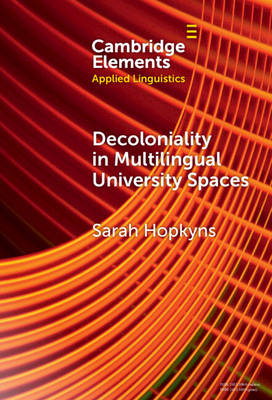
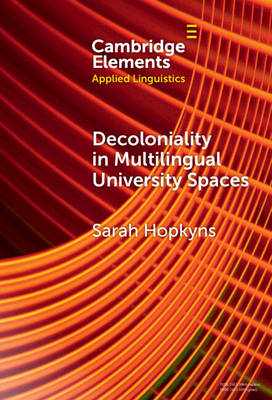
This Element explores multilingual university spaces and decoloniality, critically examining how coloniality and neoliberalism intersect. While neoliberal language policies aim to equip students with English as a 'lingua academia', critical issues relating to students' translingual identities and belonging are often overlooked. Empirical data are shared from a linguistic landscape study involving a walking ethnography of a university educationscape in the United Arab Emirates, whereby Emirati students share insights on signage and spaces as 'intertextual products' connected to (un)belonging. Data are analysed through thematic and nexus analysis with main themes including the dominance of English, imbalanced bilingualism, bottom-up translanguaging, everyday nationalism, and sticky places and objects. Findings are discussed in relation to the study setting and other global contexts. The Element closes with practical suggestions on decolonising action relevant to a range of multilingual university spaces and future research directions.
Specificaties
Betrokkenen
- Auteur(s):
- Uitgeverij:
Inhoud
- Aantal bladzijden:
- 100
- Taal:
- Engels
- Reeks:
Eigenschappen
- Productcode (EAN):
- 9781009569071
- Verschijningsdatum:
- 28/05/2026
- Uitvoering:
- Hardcover
- Formaat:
- Genaaid
- Afmetingen:
- 152 mm x 229 mm
- Gewicht:
- 303 g


Alleen bij Standaard Boekhandel
+ 248 punten op je klantenkaart van Standaard Boekhandel
Cadeau

AANGERADEN


Beoordelingen
We publiceren alleen reviews die voldoen aan de voorwaarden voor reviews. Bekijk onze voorwaarden voor reviews.