


- Afhalen na 1 uur in een winkel met voorraad
- Gratis thuislevering in België vanaf € 30
- Ruim aanbod met 7 miljoen producten
- Afhalen na 1 uur in een winkel met voorraad
- Gratis thuislevering in België vanaf € 30
- Ruim aanbod met 7 miljoen producten





Omschrijving
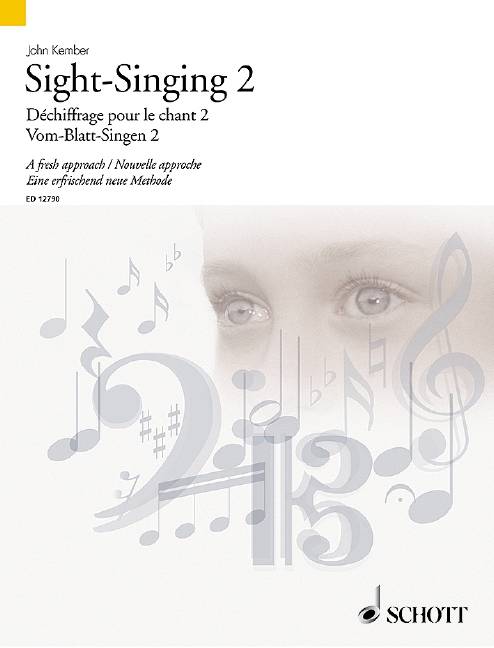
This book sets out to build on the initial aspects of singing at sight in reading both the rhythm and pitch accurately, as begun in Sight-Singing 1.
Sight-Singing 2 is divided into two parts. Part 1 comprises 95 exercises in either single or 2-part form. These cover methods to secure the line of the pitch, sequences, singing a lower part, ties, awareness of chord structure, canons, chromatic movement, modulations and tone rows. A section of 2-part exercises is also included using treble and bass clefs.
Part 2 consists of 16 solo pieces which are presented in the treble clef, and aim to develop the singer’s ability to pitch independently from their accompaniment. These short pieces are based on chords, intervals, the Dorian mode, pentatonic scales, melodic minor scales, chromatic movement and changing time signatures.
The aim of this volume is to develop a secure sense of pitch, providing a comprehensive range of styles and challenges which will be of value not just to singers but to all dedicated musicians. The skill of being able to ‘vocalise’ a melody independently and accurately is a valuable asset for all musicians regardless of vocal ability or instrument played. The ability to ‘hear’ a phrase before it is sung or played is especially useful.
- 95 solo/2-part exercises
- 16 accompanied solos
- 1 wide range of challenging styles
- valuable both to singers and instrumentalists
Instrumentation:
voice
Sight-Singing 2 is divided into two parts. Part 1 comprises 95 exercises in either single or 2-part form. These cover methods to secure the line of the pitch, sequences, singing a lower part, ties, awareness of chord structure, canons, chromatic movement, modulations and tone rows. A section of 2-part exercises is also included using treble and bass clefs.
Part 2 consists of 16 solo pieces which are presented in the treble clef, and aim to develop the singer’s ability to pitch independently from their accompaniment. These short pieces are based on chords, intervals, the Dorian mode, pentatonic scales, melodic minor scales, chromatic movement and changing time signatures.
The aim of this volume is to develop a secure sense of pitch, providing a comprehensive range of styles and challenges which will be of value not just to singers but to all dedicated musicians. The skill of being able to ‘vocalise’ a melody independently and accurately is a valuable asset for all musicians regardless of vocal ability or instrument played. The ability to ‘hear’ a phrase before it is sung or played is especially useful.
- 95 solo/2-part exercises
- 16 accompanied solos
- 1 wide range of challenging styles
- valuable both to singers and instrumentalists
Instrumentation:
voice
Specificaties
Betrokkenen
- Auteur(s):
- Uitgeverij:
Inhoud
- Aantal bladzijden:
- 60
- Taal:
- Engels
- Reeks:
- Reeksnummer:
- nr. 2
Eigenschappen
- Productcode (EAN):
- 9781902455228
- Verschijningsdatum:
- 01/01/2005
- Afmetingen:
- 231 mm x 303 mm
- Gewicht:
- 241 g


Alleen bij Standaard Boekhandel
+ 31 punten op je klantenkaart van Standaard Boekhandel
CADEAU

AANGERADEN


Beoordelingen
We publiceren alleen reviews die voldoen aan de voorwaarden voor reviews. Bekijk onze voorwaarden voor reviews.