


- Afhalen na 1 uur in een winkel met voorraad
- Gratis thuislevering in België vanaf € 30
- Ruim aanbod met 7 miljoen producten
- Afhalen na 1 uur in een winkel met voorraad
- Gratis thuislevering in België vanaf € 30
- Ruim aanbod met 7 miljoen producten





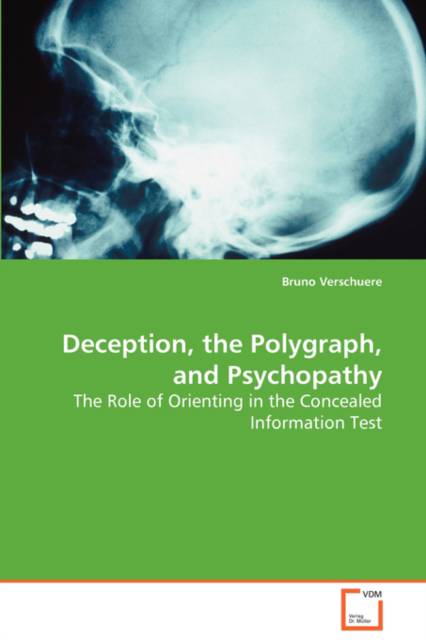
Deception, the Polygraph, and Psychopathy
The Role of Orienting in the Concealed Information Test
Bruno Verschuere
Paperback | Engels
€ 86,45
+ 172 punten
Omschrijving
Although thousands of polygraph tests are performedeach year, detection of deception using thepolygraph ("lie detector") remains controversial.Polygraph tests need to meet the same criteria asother psychological tests in order to be regardedscientific. Most importantly, polygraph tests needto be accurate and have a good theory (NationalResearch Council, 2003).The Concealed Information Test is a polygraph testwith good accuracy and a well developed theory. Theidea behind the test is simple and elegant. Theperpetrator of a crime knows things about the crime,of which an innocent is unaware. When confrontedwith this crime information, only the guilty willrecognize it and is likely to show a bodily responsetowards it. Still, the theory of the ConcealedInformation Test needs further empiricalverification.This book describes a series of studies on thetheory of the Concealed Information Test. The datagenerally support the theory of the ConcealedInformation Test. These findings suggest that theConcealed Information Test can be a useful forensictool for criminal investigations.
Specificaties
Betrokkenen
- Auteur(s):
- Uitgeverij:
Inhoud
- Aantal bladzijden:
- 144
- Taal:
- Engels
Eigenschappen
- Productcode (EAN):
- 9783639083644
- Verschijningsdatum:
- 15/09/2008
- Uitvoering:
- Paperback
- Formaat:
- Trade paperback (VS)
- Afmetingen:
- 152 mm x 229 mm
- Gewicht:
- 199 g



Alleen bij Standaard Boekhandel
+ 172 punten op je klantenkaart van Standaard Boekhandel
Cadeau

AANGERADEN


Beoordelingen
We publiceren alleen reviews die voldoen aan de voorwaarden voor reviews. Bekijk onze voorwaarden voor reviews.