


- Afhalen na 1 uur in een winkel met voorraad
- Gratis thuislevering in België vanaf € 30
- Ruim aanbod met 7 miljoen producten
- Afhalen na 1 uur in een winkel met voorraad
- Gratis thuislevering in België vanaf € 30
- Ruim aanbod met 7 miljoen producten





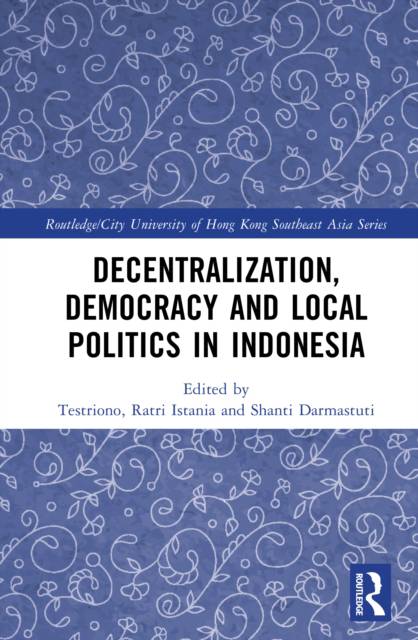
Decentralization, Democracy and Local Politics in Indonesia
€ 209,45
+ 418 punten
Omschrijving
This multidisciplinary volume provides new insights into decentralization reform in Indonesia, and examines how it has reshaped the structure of local governance and democratic practices in the country, as well as exploring the challenges and dynamics that have surfaced in Indonesia's decentralized governance landscape.
Decentralization has been in place in Indonesia for a quarter of a century, resulting in various structural changes, including the territorial autonomy (TA) and regional proliferation (or 'pemekaran'). This book examines the effectiveness of long-term decentralization measures as a legacy of centralist politics by offering new data on local democracy and administration, complemented by in-depth qualitative case studies that reflect the state of contemporary, local politics in Indonesia. The book examines the evolving challenges and emerging dynamics that have surfaced in Indonesia's decentralized governance landscape, including how new-province and district claims increase and how competition among diverse elites in regions pursuing a new province or district often precipitates conflict within the region. Engaging wider academic networks looking to understand the mechanisms of decentralization inside post-centralistic authoritarian regimes, this book will be of interest to academics studying Indonesian politics and Southeast Asian politics, as well as identity and ethnic politics. Specialists focused on decentralization will also find the volume of use.Specificaties
Betrokkenen
- Uitgeverij:
Inhoud
- Aantal bladzijden:
- 288
- Taal:
- Engels
- Reeks:
Eigenschappen
- Productcode (EAN):
- 9781041218234
- Verschijningsdatum:
- 6/07/2026
- Uitvoering:
- Hardcover
- Formaat:
- Genaaid
- Afmetingen:
- 156 mm x 233 mm

Alleen bij Standaard Boekhandel
+ 418 punten op je klantenkaart van Standaard Boekhandel
Cadeau

AANGERADEN


Beoordelingen
We publiceren alleen reviews die voldoen aan de voorwaarden voor reviews. Bekijk onze voorwaarden voor reviews.