


- Afhalen na 1 uur in een winkel met voorraad
- Gratis thuislevering in België vanaf € 30
- Ruim aanbod met 7 miljoen producten
- Afhalen na 1 uur in een winkel met voorraad
- Gratis thuislevering in België vanaf € 30
- Ruim aanbod met 7 miljoen producten





Omschrijving
“This is . . . real literature, pure and honest.”
—Vladimir Nabokov
"The scintillating English-language debut from Felsen . . . [is] a fittingly volatile record of ruinous desire.
—Publishers Weekly
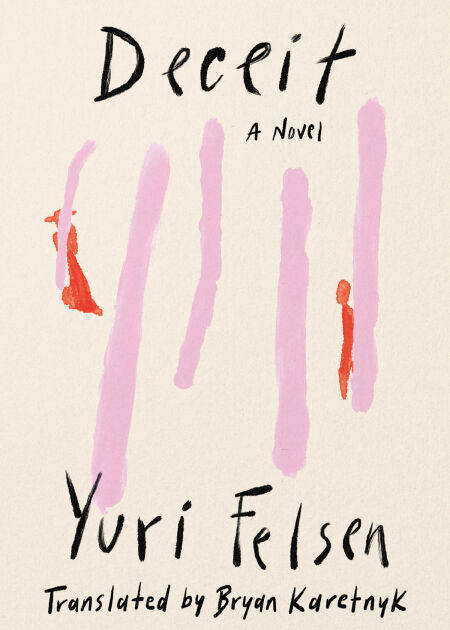
Once considered the 'Russian Proust', Yuri Felsen tells the story of an obsessive love affair set in interwar Europe in Deceit, an experimental novel in the form of a diary that is an as-yet-undiscovered landmark of Russian émigré literature.
We meet our unnamed narrator in Paris in the 20s, where he finds himself an expat after the Russian Revolution. At a friend’s request he meets the beautiful, clever socialite Lyolya, also a recent exile from Russia. What begins as casual friendship quickly turns into fascination and obsession, as Lyolya gives mixed signals and pursues other men. Our narrator, emerging from a depression, is soon overwhelmed by the very idea of her, which begins to contour all of his observations, thoughts, and feelings. While Lyolya continues to live a life unencumbered by the forces of social convention, and history, our narrator’s revelations, written in diary form, grow increasingly painful, familiar, and rich with psychological introspection.
Quite unlike any other writer in the Russian canon, Felsen evokes in poetic and idiosyncratic prose not only the Zeitgeist of interwar Europe and his émigré milieu, but also the existential crisis of the age.
—Vladimir Nabokov
"The scintillating English-language debut from Felsen . . . [is] a fittingly volatile record of ruinous desire.
—Publishers Weekly
Once considered the 'Russian Proust', Yuri Felsen tells the story of an obsessive love affair set in interwar Europe in Deceit, an experimental novel in the form of a diary that is an as-yet-undiscovered landmark of Russian émigré literature.
We meet our unnamed narrator in Paris in the 20s, where he finds himself an expat after the Russian Revolution. At a friend’s request he meets the beautiful, clever socialite Lyolya, also a recent exile from Russia. What begins as casual friendship quickly turns into fascination and obsession, as Lyolya gives mixed signals and pursues other men. Our narrator, emerging from a depression, is soon overwhelmed by the very idea of her, which begins to contour all of his observations, thoughts, and feelings. While Lyolya continues to live a life unencumbered by the forces of social convention, and history, our narrator’s revelations, written in diary form, grow increasingly painful, familiar, and rich with psychological introspection.
Quite unlike any other writer in the Russian canon, Felsen evokes in poetic and idiosyncratic prose not only the Zeitgeist of interwar Europe and his émigré milieu, but also the existential crisis of the age.
Specificaties
Betrokkenen
- Auteur(s):
- Vertaler(s):
- Uitgeverij:
Inhoud
- Aantal bladzijden:
- 256
- Taal:
- Engels
Eigenschappen
- Productcode (EAN):
- 9781662601972
- Verschijningsdatum:
- 6/02/2023
- Uitvoering:
- E-book
- Beveiligd met:
- Adobe DRM
- Formaat:
- ePub


Alleen bij Standaard Boekhandel
+ 13 punten op je klantenkaart van Standaard Boekhandel
Cadeau

AANGERADEN


Beoordelingen
We publiceren alleen reviews die voldoen aan de voorwaarden voor reviews. Bekijk onze voorwaarden voor reviews.