


- Afhalen na 1 uur in een winkel met voorraad
- Gratis thuislevering in België vanaf € 30
- Ruim aanbod met 7 miljoen producten
- Afhalen na 1 uur in een winkel met voorraad
- Gratis thuislevering in België vanaf € 30
- Ruim aanbod met 7 miljoen producten





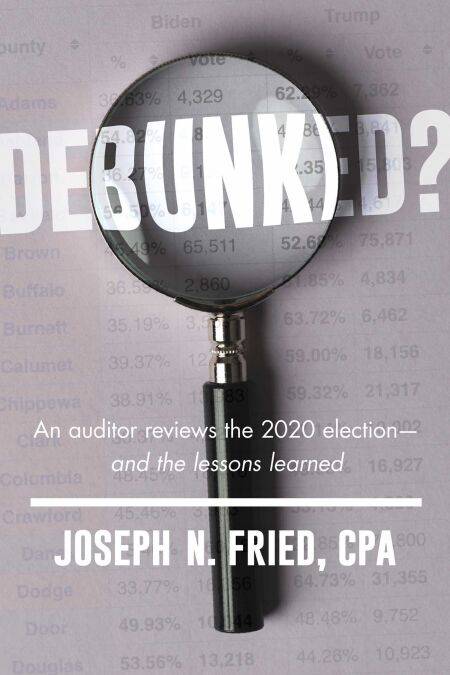
Debunked? E-BOOK
An auditor reviews the 2020 election—and the lessons learned
Joseph Fried
E-book | Engels
€ 11,17
+ 11 punten
Uitvoering
Omschrijving
Perhaps no issue in America has been more polarizing than the 2020 Presidential election.
On one side there are claims of a “stolen” election, foreign infiltration of election equipment, middle-of-the-night ballot dumps, and impossible mathematical anomalies. On the other side, everything is dismissed as “baseless,” “debunked,” and “conspiratorial.”
This controversy goes directly to the integrity of our vote, a topic that should interest and concern us all. Yet despite the importance of this controversy, very little objective analysis is available, and there is a reason. Some people are afraid to touch this subject. A careless comment could cause the loss of friends, business, and even employment.
Debunked? fearlessly fills this void—with facts. Written by a veteran auditor, it provides a reasoned, in-depth examination of the many controversies in the election, including:
Dominion Voting Systems The “Kraken” lawsuits Missing signature standards Mike Lindell Drop boxes Cyber irregularities Mail-in ballots Ballot harvesting Illegal certifications Noncitizen voting
Without a doubt, the most controversial section of the book is the detailed and quantified analysis of the election in each of 6 swing states: Arizona, Georgia, Michigan, Nevada, Pennsylvania, and Wisconsin. For each of those states, the decision to certify the election is given a thumbs up—or down. Conclusions are fully supported.
The sanctity of our vote could easily be considered the key footing in the foundation of our democracy. But, given the extreme censorship of this subject, the public is largely unaware of the issues in this book. Reading it provides important insights into one of the key controversies of our age and should, perhaps, encourage us all to demand that our votes are considered sacrosanct.
On one side there are claims of a “stolen” election, foreign infiltration of election equipment, middle-of-the-night ballot dumps, and impossible mathematical anomalies. On the other side, everything is dismissed as “baseless,” “debunked,” and “conspiratorial.”
This controversy goes directly to the integrity of our vote, a topic that should interest and concern us all. Yet despite the importance of this controversy, very little objective analysis is available, and there is a reason. Some people are afraid to touch this subject. A careless comment could cause the loss of friends, business, and even employment.
Debunked? fearlessly fills this void—with facts. Written by a veteran auditor, it provides a reasoned, in-depth examination of the many controversies in the election, including:
Dominion Voting Systems The “Kraken” lawsuits Missing signature standards Mike Lindell Drop boxes Cyber irregularities Mail-in ballots Ballot harvesting Illegal certifications Noncitizen voting
Without a doubt, the most controversial section of the book is the detailed and quantified analysis of the election in each of 6 swing states: Arizona, Georgia, Michigan, Nevada, Pennsylvania, and Wisconsin. For each of those states, the decision to certify the election is given a thumbs up—or down. Conclusions are fully supported.
The sanctity of our vote could easily be considered the key footing in the foundation of our democracy. But, given the extreme censorship of this subject, the public is largely unaware of the issues in this book. Reading it provides important insights into one of the key controversies of our age and should, perhaps, encourage us all to demand that our votes are considered sacrosanct.
Specificaties
Betrokkenen
- Auteur(s):
- Uitgeverij:
Inhoud
- Aantal bladzijden:
- 320
- Taal:
- Engels
Eigenschappen
- Productcode (EAN):
- 9781645720768
- Verschijningsdatum:
- 11/12/2022
- Uitvoering:
- E-book
- Beveiligd met:
- Adobe DRM
- Formaat:
- ePub


Alleen bij Standaard Boekhandel
+ 11 punten op je klantenkaart van Standaard Boekhandel
AANGERADEN


Beoordelingen
We publiceren alleen reviews die voldoen aan de voorwaarden voor reviews. Bekijk onze voorwaarden voor reviews.