


- Afhalen na 1 uur in een winkel met voorraad
- Gratis thuislevering in België vanaf € 30
- Ruim aanbod met 7 miljoen producten
- Afhalen na 1 uur in een winkel met voorraad
- Gratis thuislevering in België vanaf € 30
- Ruim aanbod met 7 miljoen producten





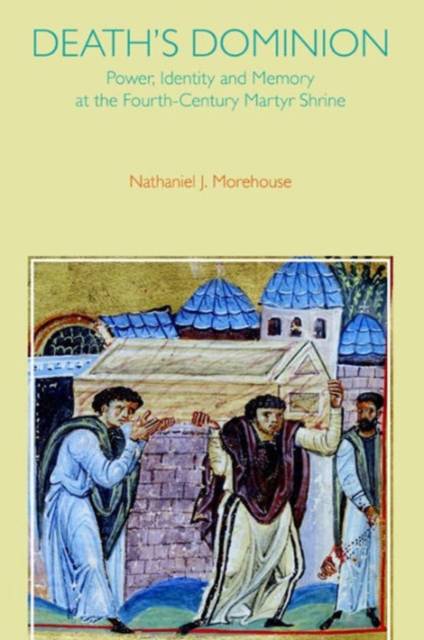
Death's Dominion
Power, Identity and Memory at the Fourth-Century Martyr Shrine
Nathaniel J Morehouse
€ 136,95
+ 273 punten
Uitvoering
Omschrijving
Through a discussion of power dynamics with a critical eye towards the political situation of influential Christian leaders including Constantine, Damasus, Ambrose, and Augustine, Death's Dominion demonstrates the ways in which these individuals sought to craft Christian identity and cultural memory around the martyr shrine. Other recent scholarship on the martyr cult has conflated issues of the early fifth century with those from the early fourth, with little discussion of the development of the martyr cult during the intervening decades. Death's Dominion corrects that omission by presenting a diachronic focus on the development of the martyr cult in the pivotal fourth century. During this period the martyr cult was repeatedly a decisive tool for the augmentation and solidification of civil and religious authority. Late in the fourth century, pilgrimage created a network within Christianity which ultimately led to a catholic Christian understanding of the martyrs' graves by broadening the appeal of regional practices to disparate audiences. This simultaneously reinforced and subverted the desired message of those who sought to craft the meaning associated with the martyrs' remains. Pilgrims helped manufacture a homogenized understanding of the martyr cult ultimately enabling it to become one of the most identifiable features of Christianity in subsequent centuries.
Specificaties
Betrokkenen
- Auteur(s):
- Uitgeverij:
Inhoud
- Aantal bladzijden:
- 288
- Taal:
- Engels
- Reeks:
Eigenschappen
- Productcode (EAN):
- 9781781790816
- Verschijningsdatum:
- 15/09/2016
- Uitvoering:
- Hardcover
- Formaat:
- Genaaid
- Afmetingen:
- 163 mm x 236 mm
- Gewicht:
- 476 g


Alleen bij Standaard Boekhandel
+ 273 punten op je klantenkaart van Standaard Boekhandel
CADEAU

AANGERADEN


Beoordelingen
We publiceren alleen reviews die voldoen aan de voorwaarden voor reviews. Bekijk onze voorwaarden voor reviews.