



Je cadeautjes zeker op tijd in huis hebben voor de feestdagen? Kom langs in onze winkels en vind het perfecte geschenk!
- Afhalen na 1 uur in een winkel met voorraad
- Gratis thuislevering in België vanaf € 30
- Ruim aanbod met 7 miljoen producten
Je cadeautjes zeker op tijd in huis hebben voor de feestdagen? Kom langs in onze winkels en vind het perfecte geschenk!
- Afhalen na 1 uur in een winkel met voorraad
- Gratis thuislevering in België vanaf € 30
- Ruim aanbod met 7 miljoen producten





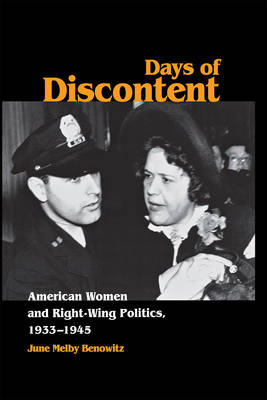
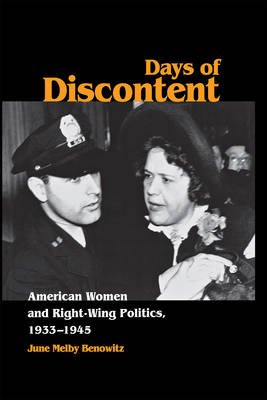
Days of Discontent
American Women and Right-Wing Politics, 1933–1945
June Melby Benowitz
Hardcover | Engels
€ 86,45
+ 172 punten
Omschrijving
Holding fast to traditional values in the face of unprecedented economic hardship, nearly a million American women joined right-wing organizations during the Great Depression and World War II. Days of Discontent provides a new perspective for understanding why the far right appealed to these women, whose political self-awareness grew with the tumultuous times.
Influenced by the conventional image of women as mothers and nurturers, many women viewed the right-wing movement as a way to protect and maintain American morality. The radical right leaders, such as Elizabeth Dilling and Grace Wick, held ideas in common with European fascists but based their politics on a uniquely American mixture of nativism, anticommunism, anti-Semitism, and racism. Benowitz's insight into their motivations sheds new light on the interaction between women's daily lives and national politics.
Specificaties
Betrokkenen
- Auteur(s):
- Uitgeverij:
Inhoud
- Aantal bladzijden:
- 240
- Taal:
- Engels
Eigenschappen
- Productcode (EAN):
- 9780875802947
- Verschijningsdatum:
- 1/03/2002
- Uitvoering:
- Hardcover
- Formaat:
- Genaaid
- Afmetingen:
- 161 mm x 236 mm
- Gewicht:
- 539 g


Alleen bij Standaard Boekhandel
+ 172 punten op je klantenkaart van Standaard Boekhandel
CADEAU


Beoordelingen
We publiceren alleen reviews die voldoen aan de voorwaarden voor reviews. Bekijk onze voorwaarden voor reviews.