


- Afhalen na 1 uur in een winkel met voorraad
- Gratis thuislevering in België vanaf € 30
- Ruim aanbod met 7 miljoen producten
- Afhalen na 1 uur in een winkel met voorraad
- Gratis thuislevering in België vanaf € 30
- Ruim aanbod met 7 miljoen producten





€ 18,45
+ 36 punten
Omschrijving
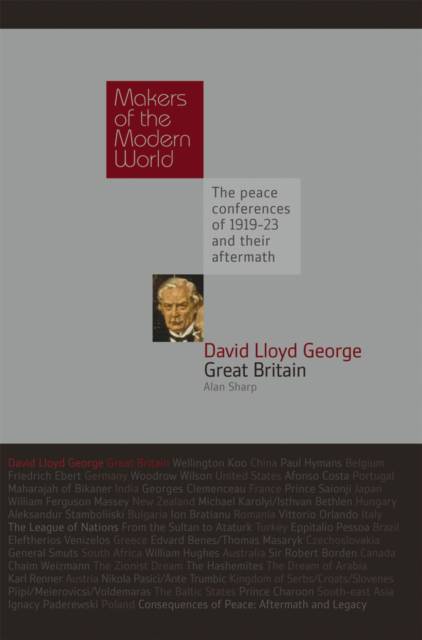
David Lloyd George (1863-1945). The end of the First World War saw Britain at the height of its power. Its fleet and air force were the largest in the world. Its armies had triumphed in the Middle East and spearheaded the final attacks in Western Europe that had driven the defeated Germans to seek an armistice. Britain now had to translate this military victory into the achievement of its war aims and future security and prosperity. Its main negotiator at the forthcoming peace conference would be its prime minister, the ebullient and enigmatic David Lloyd George, the "Welsh Wizard" and "the man who had won the war." Lloyd George's energy had maintained the war effort through the dark days of 1917 and early 1918, but now he anticipated, with relish, the prospect of winning the peace. Few were better equipped. He was a skilled and accomplished negotiator with the knack of reconciling the apparently irreconcilable. His admirers, of whom there were many, pointed to his brilliant and agile mind, his rapid grasp of complex questions and his powers of persuasion. His critics, who were also numerous, distrusted his sleight of hand, fleetness of foot and, frankly, his word. His six months in Paris in 1919, as he pitted his wits against formidable world leaders like Woodrow Wilson and Georges Clemenceau, were among the most enjoyable but exhausting of his life. This study investigates the extent to which Lloyd George succeeded in his aims and evaluates the immediate and longer-term results of his negotiations for Britain.
Specificaties
Betrokkenen
- Auteur(s):
- Uitgeverij:
Inhoud
- Aantal bladzijden:
- 288
- Taal:
- Engels
- Reeks:
Eigenschappen
- Productcode (EAN):
- 9781905791613
- Verschijningsdatum:
- 1/01/2009
- Uitvoering:
- Hardcover
- Formaat:
- Genaaid
- Afmetingen:
- 132 mm x 201 mm
- Gewicht:
- 498 g


Alleen bij Standaard Boekhandel
+ 36 punten op je klantenkaart van Standaard Boekhandel
Cadeau

AANGERADEN


Beoordelingen
We publiceren alleen reviews die voldoen aan de voorwaarden voor reviews. Bekijk onze voorwaarden voor reviews.