


- Afhalen na 1 uur in een winkel met voorraad
- Gratis thuislevering in België vanaf € 30
- Ruim aanbod met 7 miljoen producten
- Afhalen na 1 uur in een winkel met voorraad
- Gratis thuislevering in België vanaf € 30
- Ruim aanbod met 7 miljoen producten





€ 88,95
+ 177 punten
Omschrijving
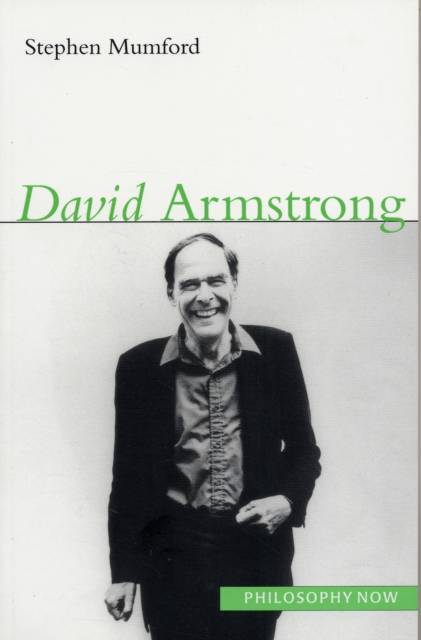
David (D. M.) Armstrong is one of Australia's greatest philosophers. His chief philosophical achievement has been the development of a core metaphysical programme, embracing the topics of universals, laws, modality and facts: a naturalistic metaphysics, consistent with a scientific view of the natural world. It is primarily through his work that Australian philosophy, and Australian metaphysics in particular, enjoys such a high reputation in the rest of the world. In this book Stephen Mumford offers an introduction to the full range of Armstrong's thought. Mumford begins with a discussion of Armstong's naturalism, his most general commitment, and his realism about universals. He then examines his theories of laws, modality and dispositions, which make up the basics of Armstrong's core theory. With this in place, Mumford explores his ideas on perception, mind and belief before returning to metaphysics in the last two chapters, looking at truth and the new view of instantiation. The book is a dispassionate, fair and unbiased account of Armstrong's thought. Although Armstong's is a body of work that Mumford regards highly and of real significance, he nevertheless highlights areas of weakness and issues about which there is room for further debate.
Specificaties
Betrokkenen
- Auteur(s):
- Uitgeverij:
Inhoud
- Aantal bladzijden:
- 216
- Taal:
- Engels
- Reeks:
Eigenschappen
- Productcode (EAN):
- 9781844651009
- Verschijningsdatum:
- 27/07/2007
- Uitvoering:
- Paperback
- Formaat:
- Trade paperback (VS)
- Afmetingen:
- 140 mm x 216 mm
- Gewicht:
- 258 g



Alleen bij Standaard Boekhandel
+ 177 punten op je klantenkaart van Standaard Boekhandel
Cadeau

AANGERADEN


Beoordelingen
We publiceren alleen reviews die voldoen aan de voorwaarden voor reviews. Bekijk onze voorwaarden voor reviews.