


- Afhalen na 1 uur in een winkel met voorraad
- Gratis thuislevering in België vanaf € 30
- Ruim aanbod met 7 miljoen producten
- Afhalen na 1 uur in een winkel met voorraad
- Gratis thuislevering in België vanaf € 30
- Ruim aanbod met 7 miljoen producten





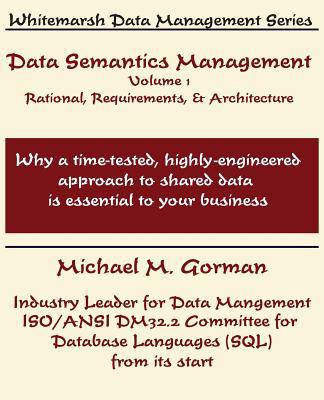
Data Semantics Management, Volume 1, Rationale, Requirements, and Architecture
Michael M Gorman
Paperback | Engels
€ 124,95
+ 249 punten
Omschrijving
The Data Semantics Management book is divided into two volumes. Volume 1, this volume, addresses Rationale, Requirements, and Architecture. Volume 2 addresses Deployment. This volume justifies why accomplishing data semantics management is so critical to the overall success of data interoperability and shared data. The approach embraced by these two volumes is founded on the idea of top-down and centralized architecture, engineering, policies, and procedures, but bottom-up, distributed accomplishment. If attempted only top-down, the outcomes will mirror familiar centralized czar-like failures of the past. If accomplished only bottom-up, the outcomes will be the vast forests of semantic stove pipes. Volume 1 presents these key topics: Rationale, Data Semantics Components, Failures and Lessons Learned, Engineering, Successful Name Construction, Semantic Hierarchies including taxonomies and ontologies, Value Domain Managememnt, and the Business Fact Specification cases including Business Rule engineering. The book identifies and describes the two error classes that prevent data interoperability and sharing. Each chapter addresses how these two classes are addressed. Each chapter concludes with an extensive set of questions and exercises.
Specificaties
Betrokkenen
- Auteur(s):
- Uitgeverij:
Inhoud
- Aantal bladzijden:
- 404
- Taal:
- Engels
Eigenschappen
- Productcode (EAN):
- 9780978996840
- Verschijningsdatum:
- 30/09/2008
- Uitvoering:
- Paperback
- Formaat:
- Trade paperback (VS)
- Afmetingen:
- 190 mm x 235 mm
- Gewicht:
- 689 g



Alleen bij Standaard Boekhandel
+ 249 punten op je klantenkaart van Standaard Boekhandel
Cadeau

AANGERADEN


Beoordelingen
We publiceren alleen reviews die voldoen aan de voorwaarden voor reviews. Bekijk onze voorwaarden voor reviews.