


- Afhalen na 1 uur in een winkel met voorraad
- Gratis thuislevering in België vanaf € 30
- Ruim aanbod met 7 miljoen producten
- Afhalen na 1 uur in een winkel met voorraad
- Gratis thuislevering in België vanaf € 30
- Ruim aanbod met 7 miljoen producten





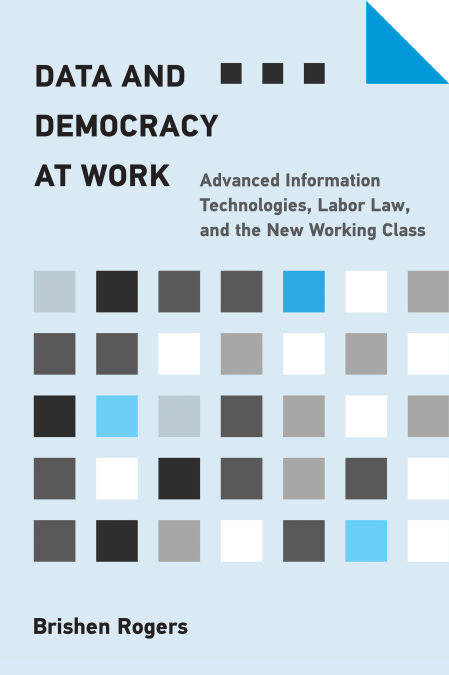
Data and Democracy at Work E-BOOK
Advanced Information Technologies, Labor Law, and the New Working Class
Brishen Rogers
E-book | Engels
€ 49,28
+ 49 punten
Eenvoudig bestellen
Veilig betalen


Onmiddellijk geleverd via e-mail
Omschrijving
An exploration of how major companies have used advanced information technologies to limit worker power, and how labor law reform could reverse that trend.
As our economy has shifted away from industrial production and service industries have become dominant, many of the nation's largest employers are now in fields like retail, food service, logistics, and hospitality. These companies have turned to data-driven surveillance technologies that operate over a vast distance, enabling cheaper oversight of massive numbers of workers. Data and Democracy at Work argues that companies often use new data-driven technologies as a power resource—or even a tool of class domination—and that our labor laws allow them to do so.
Employers have established broad rights to use technology to gather data on workers and their performance, to exclude others from accessing that data, and to use that data to refine their managerial strategies. Through these means, companies have suppressed workers' ability to organize and unionize, thereby driving down wages and eroding working conditions.
Labor law today encourages employer dominance in many ways—but labor law can also be reformed to become a tool for increased equity. The COVID-19 pandemic and subsequent Great Resignation have indicated an increased political mobilization of the so-called essential workers of the pandemic, many of them service industry workers. This book describes the necessary legal reforms to increase workers' associational power and democratize workplace data, establishing more balanced relationships between workers and employers and ensuring a brighter and more equitable future for us all.
As our economy has shifted away from industrial production and service industries have become dominant, many of the nation's largest employers are now in fields like retail, food service, logistics, and hospitality. These companies have turned to data-driven surveillance technologies that operate over a vast distance, enabling cheaper oversight of massive numbers of workers. Data and Democracy at Work argues that companies often use new data-driven technologies as a power resource—or even a tool of class domination—and that our labor laws allow them to do so.
Employers have established broad rights to use technology to gather data on workers and their performance, to exclude others from accessing that data, and to use that data to refine their managerial strategies. Through these means, companies have suppressed workers' ability to organize and unionize, thereby driving down wages and eroding working conditions.
Labor law today encourages employer dominance in many ways—but labor law can also be reformed to become a tool for increased equity. The COVID-19 pandemic and subsequent Great Resignation have indicated an increased political mobilization of the so-called essential workers of the pandemic, many of them service industry workers. This book describes the necessary legal reforms to increase workers' associational power and democratize workplace data, establishing more balanced relationships between workers and employers and ensuring a brighter and more equitable future for us all.
Specificaties
Betrokkenen
- Auteur(s):
- Uitgeverij:
Inhoud
- Aantal bladzijden:
- 304
- Taal:
- Engels
Eigenschappen
- Productcode (EAN):
- 9780262373364
- Verschijningsdatum:
- 20/03/2023
- Uitvoering:
- E-book
- Beveiligd met:
- Adobe DRM
- Formaat:
- ePub


Alleen bij Standaard Boekhandel
+ 49 punten op je klantenkaart van Standaard Boekhandel
CADEAU

AANGERADEN


Beoordelingen
We publiceren alleen reviews die voldoen aan de voorwaarden voor reviews. Bekijk onze voorwaarden voor reviews.