



- Afhalen na 1 uur in een winkel met voorraad
- In januari gratis thuislevering in België
- Ruim aanbod met 7 miljoen producten
- Afhalen na 1 uur in een winkel met voorraad
- In januari gratis thuislevering in België
- Ruim aanbod met 7 miljoen producten





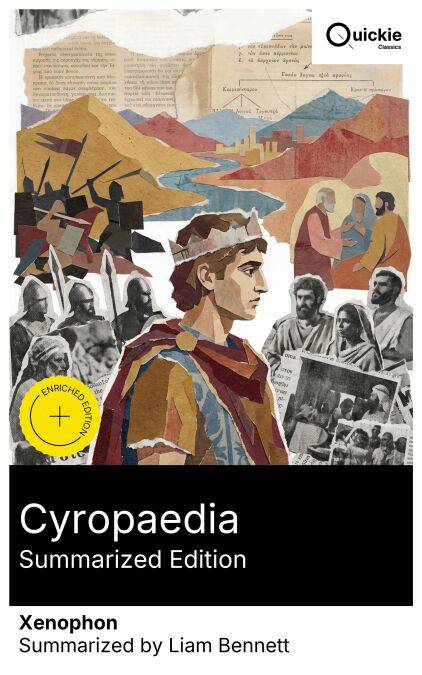
Cyropaedia (Summarized Edition) E-BOOK
Enriched edition. Cyrus the Great's Education: A political romance of Ancient Persia and a mirror for princes that shaped Machiavelli
Xenophon
E-book | Engels
€ 1,99
+ 1 punten
Omschrijving
The Cyropaedia is Xenophon's fourth-century "education of Cyrus," a hybrid of biography, political theory, and historical romance that charts the formation and rule of Cyrus the Great. In lucid Attic prose and episodic scenes, Xenophon combines set speeches, tactical vignettes, and ethnographic asides to model imperial leadership. Its idealizing arc—from Cyrus's training through conquest and administration—ends with a sombre epilogue on Persian decline, inviting readers to test exemplar against experience and to weigh virtue, persuasion, and institutions in sustaining power. An Athenian gentleman-soldier and student of Socrates, Xenophon campaigned with Cyrus the Younger and led the Ten Thousand out of Persia—an ordeal recorded in his Anabasis. Exiled from Athens and resident among Spartans, he blended practical command with philosophical inquiry. These experiences, and his curiosity about Persian customs, shaped his vision of a ruler whose self-mastery, prudent delegation, and attention to ritual bind disparate peoples. Students of political thought, leadership, and empire will find in this mirror-for-princes a rigorous manual—one that influenced Machiavelli and still provokes debate about ideals versus institutions. Read it alongside Herodotus and Plato to triangulate Greek views of Persia and power; read it on its own for the pleasure of clear storytelling yoked to practical wisdom.
Quickie Classics summarizes timeless works with precision, preserving the author's voice and keeping the prose clear, fast, and readable—distilled, never diluted. Enriched Edition extras: Introduction · Synopsis · Historical Context · Author Biography · Brief Analysis · 4 Reflection Q&As · Editorial Footnotes.
Quickie Classics summarizes timeless works with precision, preserving the author's voice and keeping the prose clear, fast, and readable—distilled, never diluted. Enriched Edition extras: Introduction · Synopsis · Historical Context · Author Biography · Brief Analysis · 4 Reflection Q&As · Editorial Footnotes.
Specificaties
Betrokkenen
- Auteur(s):
- Vertaler(s):
- Uitgeverij:
Inhoud
- Aantal bladzijden:
- 107
- Taal:
- Engels
Eigenschappen
- Productcode (EAN):
- 8596547881551
- Verschijningsdatum:
- 09/01/2026
- Uitvoering:
- E-book
- Beveiligd met:
- Digital watermarking
- Formaat:
- ePub


Alleen bij Standaard Boekhandel
+ 1 punten op je klantenkaart van Standaard Boekhandel
Cadeau

AANGERADEN


Beoordelingen
We publiceren alleen reviews die voldoen aan de voorwaarden voor reviews. Bekijk onze voorwaarden voor reviews.