


- Afhalen na 1 uur in een winkel met voorraad
- Gratis thuislevering in België vanaf € 30
- Ruim aanbod met 7 miljoen producten
- Afhalen na 1 uur in een winkel met voorraad
- Gratis thuislevering in België vanaf € 30
- Ruim aanbod met 7 miljoen producten





€ 59,45
+ 118 punten
Omschrijving
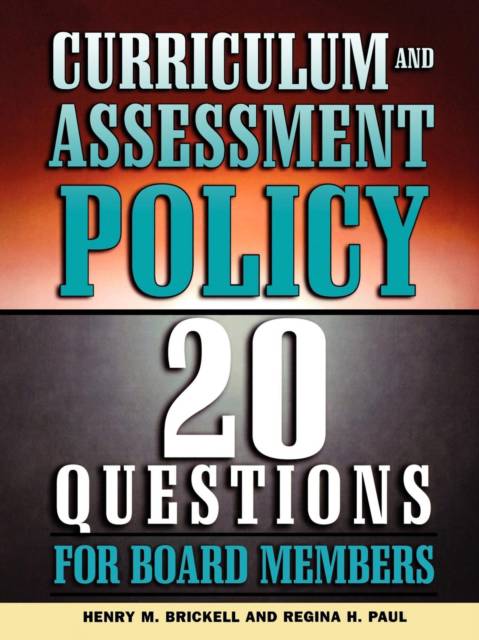
Most school boards delegate curriculum and assessment to school administrators, which in effect, lowers standards and leads to aggressive intervention by policy makers at the state and federal levels. This book is designed to stimulate and assist local boards in the proper exercise of their legal authority over curriculum and assessment. It discusses why non-educators should govern the core of every school by determining what is to be learned and whether it is being learned, and how the work of the board can be divided from the work of the superintendent on such matters. Features: A graphic essay dividing the governing responsibilities of a board of education from the administrative responsibilities of the superintendent, 20 key policy questions that every board should answer, Alternate policy positions a board might consider adopting with alternative positions supported by appropriate arguments, Samples of actual policies adopted by boards to govern curriculum and illustrate the level of detail and the writing style boards might want to use for its own policies. This book will assist school board members, superintendents, curriculum directors and specialists, and testing directors, raise standards for learning in local schools.
Specificaties
Betrokkenen
- Auteur(s):
- Uitgeverij:
Inhoud
- Aantal bladzijden:
- 94
- Taal:
- Engels
- Reeks:
Eigenschappen
- Productcode (EAN):
- 9781578862092
- Verschijningsdatum:
- 1/01/2005
- Uitvoering:
- Paperback
- Formaat:
- Trade paperback (VS)
- Afmetingen:
- 210 mm x 279 mm
- Gewicht:
- 231 g


Alleen bij Standaard Boekhandel
+ 118 punten op je klantenkaart van Standaard Boekhandel
Cadeau

AANGERADEN


Beoordelingen
We publiceren alleen reviews die voldoen aan de voorwaarden voor reviews. Bekijk onze voorwaarden voor reviews.