


- Afhalen na 1 uur in een winkel met voorraad
- Gratis thuislevering in België vanaf € 30
- Ruim aanbod met 7 miljoen producten
- Afhalen na 1 uur in een winkel met voorraad
- Gratis thuislevering in België vanaf € 30
- Ruim aanbod met 7 miljoen producten





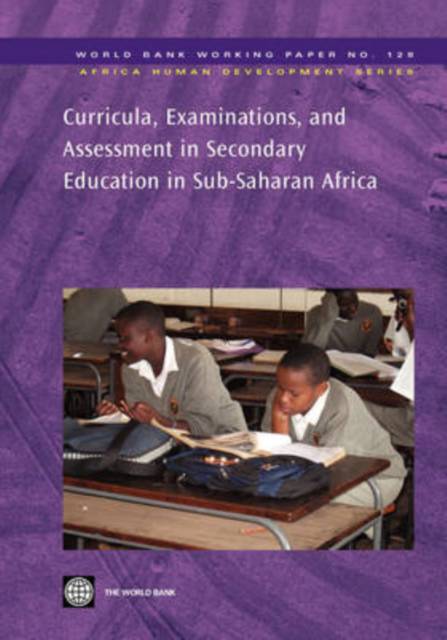
Curricula, Examinations, and Assessment in Secondary Education in Sub-Saharan Africa
Volume 128
World Bank
€ 25,45
+ 50 punten
Omschrijving
Economic and social changes, fast evolution of technology, and the growing importance of internet services and international communications-all these require secondary education providers to adapt what is taught and learned in schools. However, in Africa the content of secondary curricula is in most cases ill-adapted to 21st century challenges, where young people are mobile, have access to "more and instant information," and face health threats such as HIV/AIDS. In addition, implementation problems exist, and the time for instruction is often much less then what is required by the prescribed secondary curriculum. In Africa there is a need to develop a secondary education curriculum adapted to the local economic and social environment, but with international-comparable performance indicators. This study analyzes that challenge: the quality of curricula and assessment, and their development processes in secondary education in Africa against the background of existing contexts, conditions, and ambitions on the one hand and current pedagogical thinking on the other.
Specificaties
Betrokkenen
- Auteur(s):
- Uitgeverij:
Inhoud
- Aantal bladzijden:
- 140
- Taal:
- Engels
- Reeks:
Eigenschappen
- Productcode (EAN):
- 9780821373484
- Verschijningsdatum:
- 1/01/2008
- Uitvoering:
- Paperback
- Formaat:
- Trade paperback (VS)
- Afmetingen:
- 179 mm x 251 mm
- Gewicht:
- 263 g


Alleen bij Standaard Boekhandel
+ 50 punten op je klantenkaart van Standaard Boekhandel
Cadeau

AANGERADEN


Beoordelingen
We publiceren alleen reviews die voldoen aan de voorwaarden voor reviews. Bekijk onze voorwaarden voor reviews.