


- Afhalen na 1 uur in een winkel met voorraad
- Gratis thuislevering in België vanaf € 30
- Ruim aanbod met 7 miljoen producten
- Afhalen na 1 uur in een winkel met voorraad
- Gratis thuislevering in België vanaf € 30
- Ruim aanbod met 7 miljoen producten





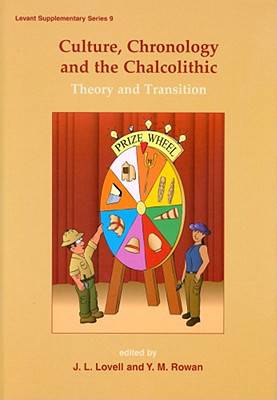
Culture, Chronology and the Chalcolithic
€ 55,95
+ 111 punten
Omschrijving
To some, the Chalcolithic (4700/4500-3700/3600 BC cal.), as the first period with metallurgy, large sprawling villages, rich mortuary offerings, and cult centres, represents a developmental stage on the road to the urban Bronze Age, the "dawn of history". Others have called it 'the end of prehistory'. More recent scholarship focuses upon the diversification of the subsistence economy, elaborated craft production, and expanded networks for resource acquisition. Many of today's Chalcolithic specialists were taught by biblical archaeologists, such that the culture history paradigm remains deeply embedded. This volume grew out of a workshop held in Madrid in 2006 and aims to kick start a dialogue about how to move beyond culture history and chronology in order to re-engage with larger theoretical discourses. A vast swathe of research in the region ignores these issues and considers theory to be irrelevant. One has the impression that the political realities of the region (including a predilection for biblical archaeology) has left a large proportion of archaeologists in the region, including prehistorians, lost without a map. Contributors to this volume recognize that culture history is the platform upon which current archaeological research is discussed but differ in the degree of emphasis placed on previously defined entities or phases. Delineating levels of difference and similarity between temporal boundaries is critical in this process. The two themes of this volume - culture and chronology - combine the need for theoretical engagement with the establishment of broader, more precise empirical data using explicit classificatory schemes. This is, essentially, the rock and the hard place where much archaeological debate is wedged, and as such the volume will have resonance for scholars of other periods and regions.
Specificaties
Betrokkenen
- Uitgeverij:
Inhoud
- Aantal bladzijden:
- 208
- Taal:
- Engels
- Reeks:
Eigenschappen
- Productcode (EAN):
- 9781842179932
- Verschijningsdatum:
- 31/03/2011
- Uitvoering:
- Hardcover
- Formaat:
- Genaaid
- Afmetingen:
- 208 mm x 297 mm
- Gewicht:
- 1088 g


Alleen bij Standaard Boekhandel
+ 111 punten op je klantenkaart van Standaard Boekhandel
Cadeau

AANGERADEN


Beoordelingen
We publiceren alleen reviews die voldoen aan de voorwaarden voor reviews. Bekijk onze voorwaarden voor reviews.