


- Afhalen na 1 uur in een winkel met voorraad
- Gratis thuislevering in België vanaf € 30
- Ruim aanbod met 7 miljoen producten
- Afhalen na 1 uur in een winkel met voorraad
- Gratis thuislevering in België vanaf € 30
- Ruim aanbod met 7 miljoen producten





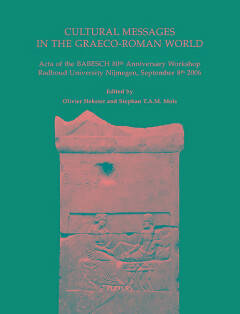
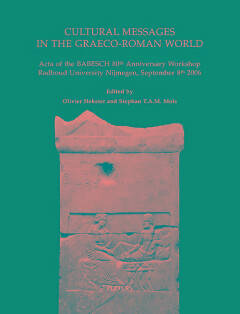
Cultural Messages in the Graeco-Roman World
'Acta of the Babesch 80th Anniversary Workshop Radboud University Nijmegen, September 8th 2006'
O.//Mols S.T.A.M. Hekster
€ 48,00
+ 96 punten
Omschrijving
This volume presents the outcome of the workshop 'Cultural Messages in the Graeco-Roman World', which marked the 80th anniversary of BABESCH. It takes as its premise that looking at modes to analyse cultural messages in the classical world is a valuable approach to the study of antiquity. The main purpose of the volume is therefore to explore ways in which (and the extent towards which) one can answer substantial questions about Greek and Roman culture through analysing material sources. To this end, the volume includes papers by archaeologists and ancient historians with an interest in larger methodological and theoretical questions. They all explore one of two broader themes: funerary culture and domestic culture. Within the context of those two themes, papers question how one can make statements about ancient societies based upon a specific set of material finds. The focus of the individual papers ranges from the early Greek until the later Roman period, evenly distributed among the two themes. This broad chronological range indicates the wide framework of the volume. The result is a highly interesting mixture of different kinds of studies, all emphasising the critical importance of context - local, geographical, and in terms of materiality - in any sustainable analysis of ancient cultural messages.
Specificaties
Betrokkenen
- Auteur(s):
- Uitgeverij:
Inhoud
- Aantal bladzijden:
- 92
- Taal:
- Engels
- Reeks:
- Reeksnummer:
- nr. 15
Eigenschappen
- Productcode (EAN):
- 9789042923652
- Verschijningsdatum:
- 17/06/2010
- Uitvoering:
- Paperback
- Formaat:
- Trade paperback (VS)
- Afmetingen:
- 208 mm x 272 mm
- Gewicht:
- 376 g


Alleen bij Standaard Boekhandel
+ 96 punten op je klantenkaart van Standaard Boekhandel
AANGERADEN


Beoordelingen
We publiceren alleen reviews die voldoen aan de voorwaarden voor reviews. Bekijk onze voorwaarden voor reviews.