



Je cadeautjes zeker op tijd in huis hebben voor de feestdagen? Kom langs in onze winkels en vind het perfecte geschenk!
- Afhalen na 1 uur in een winkel met voorraad
- Gratis thuislevering in België vanaf € 30
- Ruim aanbod met 7 miljoen producten
Je cadeautjes zeker op tijd in huis hebben voor de feestdagen? Kom langs in onze winkels en vind het perfecte geschenk!
- Afhalen na 1 uur in een winkel met voorraad
- Gratis thuislevering in België vanaf € 30
- Ruim aanbod met 7 miljoen producten





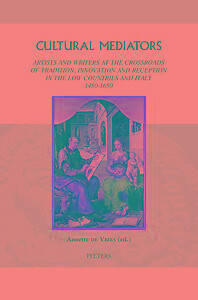
Cultural Mediators
Artists and Writers at the Crossroads of Tradition, Innovation and Reception in the Low Countries and Italy 1450-1650
Vries A. de
€ 91,95
+ 183 punten
Omschrijving
The notion of cultural mediation is a promising albeit not yet methodologically clear-cut and well-probed instrument for studying artistic and literary phenomena in the Late Medieval and Early Modern Period. This volume addresses the role of artists and writers as cultural mediators in a variety of cultural fields such as religion, politics, morality and artistic expression (art, literature and theatre). It fully acknowledges the diversity of roles that the term cultural mediator incorporates. The artist or writer may be a neutral transmitter, a dedicated instructor, a conscious advocate, an unconscious exponent or an autonomous inventor of whatever message is being transmitted by way of visual or verbal artefacts. In reality, these roles were often intertwined, but distinguishing them enables us to recognise the main variables that shaped the role of a cultural mediator: the intentionality of the artist or writer, the function of his or her work and its reception by the viewers or audience. The essays collected in this volume offer a stimulating, interdisciplinary exploration of the range, variety and impact of the artist or writer as a cultural mediator, while avoiding a deadlock between notions of art and literature as subsidiary versus self-contained fields of creative expression.
Specificaties
Betrokkenen
- Auteur(s):
- Uitgeverij:
Inhoud
- Aantal bladzijden:
- 212
- Taal:
- Engels
- Reeks:
- Reeksnummer:
- nr. 31
Eigenschappen
- Productcode (EAN):
- 9789042920439
- Verschijningsdatum:
- 22/10/2008
- Uitvoering:
- Hardcover
- Formaat:
- Genaaid
- Afmetingen:
- 168 mm x 246 mm
- Gewicht:
- 703 g


Alleen bij Standaard Boekhandel
+ 183 punten op je klantenkaart van Standaard Boekhandel
CADEAU


Beoordelingen
We publiceren alleen reviews die voldoen aan de voorwaarden voor reviews. Bekijk onze voorwaarden voor reviews.