


- Afhalen na 1 uur in een winkel met voorraad
- Gratis thuislevering in België vanaf € 30
- Ruim aanbod met 7 miljoen producten
- Afhalen na 1 uur in een winkel met voorraad
- Gratis thuislevering in België vanaf € 30
- Ruim aanbod met 7 miljoen producten





€ 15,02
+ 15 punten
Uitvoering
Omschrijving
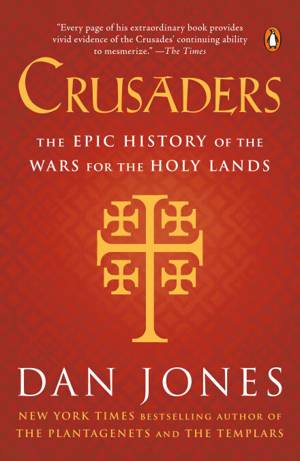
A major new history of the Crusades with an unprecedented wide scope, told in a tableau of portraits of people on all sides of the wars, from the author of Powers and Thrones.
For more than one thousand years, Christians and Muslims lived side by side, sometimes at peace and sometimes at war. When Christian armies seized Jerusalem in 1099, they began the most notorious period of conflict between the two religions. Depending on who you ask, the fall of the holy city was either an inspiring legend or the greatest of horrors. In Crusaders, Dan Jones interrogates the many sides of the larger story, charting a deeply human and avowedly pluralist path through the crusading era.
Expanding the usual timeframe, Jones looks to the roots of Christian-Muslim relations in the eighth century and tracks the influence of crusading to present day. He widens the geographical focus to far-flung regions home to so-called enemies of the Church, including Spain, North Africa, southern France, and the Baltic states. By telling intimate stories of individual journeys, Jones illuminates these centuries of war not only from the perspective of popes and kings, but from Arab-Sicilian poets, Byzantine princesses, Sunni scholars, Shi'ite viziers, Mamluk slave soldiers, Mongol chieftains, and barefoot friars.
Crusading remains a rallying call to this day, but its role in the popular imagination ignores the cooperation and complicated coexistence that were just as much a feature of the period as warfare. The age-old relationships between faith, conquest, wealth, power, and trade meant that crusading was not only about fighting for the glory of God, but also, among other earthly reasons, about gold. In this richly dramatic narrative that gives voice to sources usually pushed to the margins, Dan Jones has written an authoritative survey of the holy wars with global scope and human focus.
For more than one thousand years, Christians and Muslims lived side by side, sometimes at peace and sometimes at war. When Christian armies seized Jerusalem in 1099, they began the most notorious period of conflict between the two religions. Depending on who you ask, the fall of the holy city was either an inspiring legend or the greatest of horrors. In Crusaders, Dan Jones interrogates the many sides of the larger story, charting a deeply human and avowedly pluralist path through the crusading era.
Expanding the usual timeframe, Jones looks to the roots of Christian-Muslim relations in the eighth century and tracks the influence of crusading to present day. He widens the geographical focus to far-flung regions home to so-called enemies of the Church, including Spain, North Africa, southern France, and the Baltic states. By telling intimate stories of individual journeys, Jones illuminates these centuries of war not only from the perspective of popes and kings, but from Arab-Sicilian poets, Byzantine princesses, Sunni scholars, Shi'ite viziers, Mamluk slave soldiers, Mongol chieftains, and barefoot friars.
Crusading remains a rallying call to this day, but its role in the popular imagination ignores the cooperation and complicated coexistence that were just as much a feature of the period as warfare. The age-old relationships between faith, conquest, wealth, power, and trade meant that crusading was not only about fighting for the glory of God, but also, among other earthly reasons, about gold. In this richly dramatic narrative that gives voice to sources usually pushed to the margins, Dan Jones has written an authoritative survey of the holy wars with global scope and human focus.
Specificaties
Betrokkenen
- Auteur(s):
- Uitgeverij:
Inhoud
- Aantal bladzijden:
- 464
- Taal:
- Engels
Eigenschappen
- Productcode (EAN):
- 9780698186446
- Verschijningsdatum:
- 30/09/2019
- Uitvoering:
- E-book
- Beveiligd met:
- Adobe DRM
- Formaat:
- ePub


Alleen bij Standaard Boekhandel
+ 15 punten op je klantenkaart van Standaard Boekhandel
Cadeau

AANGERADEN


Beoordelingen
We publiceren alleen reviews die voldoen aan de voorwaarden voor reviews. Bekijk onze voorwaarden voor reviews.