


- Afhalen na 1 uur in een winkel met voorraad
- Gratis thuislevering in België vanaf € 30
- Ruim aanbod met 7 miljoen producten
- Afhalen na 1 uur in een winkel met voorraad
- Gratis thuislevering in België vanaf € 30
- Ruim aanbod met 7 miljoen producten





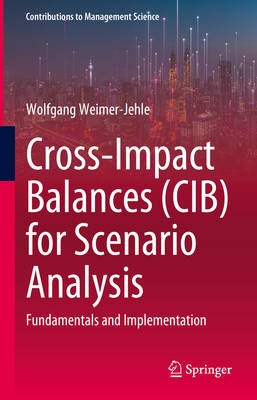
Cross-Impact Balances (Cib) for Scenario Analysis
Fundamentals and Implementation
Wolfgang Weimer-Jehle
€ 173,45
+ 346 punten
Uitvoering
Omschrijving
Cross-Impact Balances (CIB) is a method frequently used for research, in companies and in administrations for the systematic construction of qualitative scenarios. This book introduces the fundamentals of the method and uses a clear step-by-step example to explain how scenarios can be constructed with CIB. It describes possible problems in applying the method and offers help for various use cases. It includes a detailed discussion of the design decisions that shape a CIB application and the methods that can be used to collect the necessary data. The application examples presented provide a first impression of the possibilities of the method. A discussion of the strengths and limitations of the method offers guidance on the use cases in which CIB can be profitably applied. The book is valuable for researchers and practitioners in the field of scenario analysis.
Specificaties
Betrokkenen
- Auteur(s):
- Uitgeverij:
Inhoud
- Aantal bladzijden:
- 272
- Taal:
- Engels
- Reeks:
Eigenschappen
- Productcode (EAN):
- 9783031272295
- Verschijningsdatum:
- 3/05/2023
- Uitvoering:
- Hardcover
- Formaat:
- Genaaid
- Afmetingen:
- 156 mm x 234 mm
- Gewicht:
- 589 g


Alleen bij Standaard Boekhandel
+ 346 punten op je klantenkaart van Standaard Boekhandel
Cadeau

AANGERADEN


Beoordelingen
We publiceren alleen reviews die voldoen aan de voorwaarden voor reviews. Bekijk onze voorwaarden voor reviews.