


- Afhalen na 1 uur in een winkel met voorraad
- Gratis thuislevering in België vanaf € 30
- Ruim aanbod met 7 miljoen producten
- Afhalen na 1 uur in een winkel met voorraad
- Gratis thuislevering in België vanaf € 30
- Ruim aanbod met 7 miljoen producten





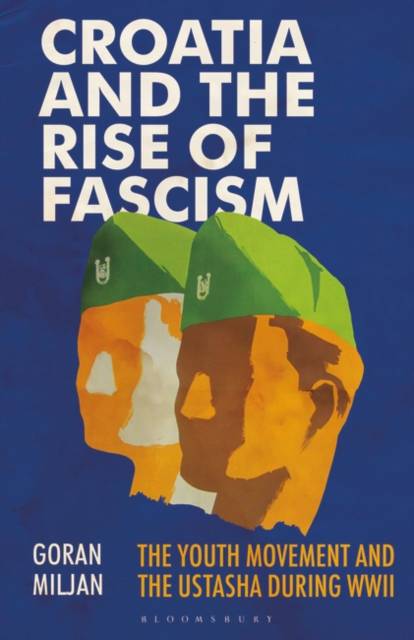
Croatia and the Rise of Fascism The Youth Movement and the Ustasha During WWII
The Youth Movement and the Ustasha During WWII
Goran Miljan
€ 79,95
+ 159 punten
Omschrijving
During World War II, Croatia became a fascist state under the control of the Ustasha Movement - allied with Nazi Germany and Fascist Italy. Here, Goran Miljan examines and analyzes for the first time the ideology, practices, and international connections of the Ustasha Youth organization.
The Ustasha Youth was an all-embracing fascist youth organization, established in July 1941 by the `Independent State of Croatia' with the goal of reeducating young people in the model of an ideal `new' Croat. This youth organization attempted to set in motion an all-embracing, totalitarian national revolution which in reality consisted of specific interconnected, mutually dependent practices: prosecution, oppression, mass murder, and the Holocaust - all of which were officially legalized within a month of the regime's accession to power. To this end education, sport, manual work and camping took place in specially established Ustasha Youth Schools. In order to justify their radical policies of youth reeducation, the Ustasha Youth, besides emphasizing national character and the importance of cultural and national purity, also engaged in transnational activities and exchanges, especially with the Hlinkova mladez [Hlinka Youth] of the Slovak Republic. Both youth organizations were closely modelled after the youth organizations in Nazi Germany and Fascist Italy.
This is a little studied part of the history of World War II and of Fascism, and will be essential reading for scholars of Central Europe and the Holocaust.
The Ustasha Youth was an all-embracing fascist youth organization, established in July 1941 by the `Independent State of Croatia' with the goal of reeducating young people in the model of an ideal `new' Croat. This youth organization attempted to set in motion an all-embracing, totalitarian national revolution which in reality consisted of specific interconnected, mutually dependent practices: prosecution, oppression, mass murder, and the Holocaust - all of which were officially legalized within a month of the regime's accession to power. To this end education, sport, manual work and camping took place in specially established Ustasha Youth Schools. In order to justify their radical policies of youth reeducation, the Ustasha Youth, besides emphasizing national character and the importance of cultural and national purity, also engaged in transnational activities and exchanges, especially with the Hlinkova mladez [Hlinka Youth] of the Slovak Republic. Both youth organizations were closely modelled after the youth organizations in Nazi Germany and Fascist Italy.
This is a little studied part of the history of World War II and of Fascism, and will be essential reading for scholars of Central Europe and the Holocaust.
Specificaties
Betrokkenen
- Auteur(s):
- Uitgeverij:
Inhoud
- Aantal bladzijden:
- 288
- Taal:
- Engels
- Reeks:
Eigenschappen
- Productcode (EAN):
- 9780755600014
- Verschijningsdatum:
- 28/11/2019
- Uitvoering:
- Paperback
- Formaat:
- Trade paperback (VS)
- Afmetingen:
- 140 mm x 216 mm
- Gewicht:
- 335 g


Alleen bij Standaard Boekhandel
+ 159 punten op je klantenkaart van Standaard Boekhandel
Wedstrijd


Beoordelingen
We publiceren alleen reviews die voldoen aan de voorwaarden voor reviews. Bekijk onze voorwaarden voor reviews.