


- Afhalen na 1 uur in een winkel met voorraad
- Gratis thuislevering in België vanaf € 30
- Ruim aanbod met 7 miljoen producten
- Afhalen na 1 uur in een winkel met voorraad
- Gratis thuislevering in België vanaf € 30
- Ruim aanbod met 7 miljoen producten





Omschrijving
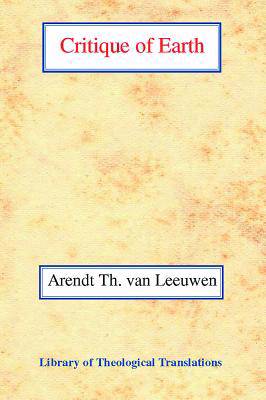
In the second series of van Leeuwen's Gifford Lectures, the author examines the 'transmutation' from the critique of heaven into the critique of earth. His thesis is that Marx's critique of religion is seen not in his opposition to 'religion', but in his ideas on political economy. This thesis is undergirded with analysis of Marx's critique of political economy from 1842 to Das Kapital. Marx's biography works itself out at three levels of critique: from religion via politics to political economy. Das Kapital sums up the whole of Marx's thought. The analysis of the 'mystical character of commodities' is both the key to the critique of Christianity, 'with its cult of abstract man', and the key to the critique of political economy, the fetishism of which 'emerges clear as the noon-day, whenever it has to do with capital'. The reception of Marx's critique in the categories, structure and method of traditional theology is not feasible; a transformation of theology is necessary. To put it another way, reception of Marx's critique will be both cause and symptom of a self-fulfilling theological transformation, for which this work provides a prolegomena.
Specificaties
Betrokkenen
- Auteur(s):
- Uitgeverij:
Inhoud
- Aantal bladzijden:
- 300
- Taal:
- Engels
- Reeks:
Eigenschappen
- Productcode (EAN):
- 9780227170397
- Verschijningsdatum:
- 27/02/2003
- Uitvoering:
- Paperback
- Formaat:
- Trade paperback (VS)
- Afmetingen:
- 152 mm x 229 mm
- Gewicht:
- 435 g


Alleen bij Standaard Boekhandel
+ 60 punten op je klantenkaart van Standaard Boekhandel
Cadeau

AANGERADEN


Beoordelingen
We publiceren alleen reviews die voldoen aan de voorwaarden voor reviews. Bekijk onze voorwaarden voor reviews.